Dollars and Sense
The Benefits of Providing Your Staff with
Financial Education

Doug Webber
Principal,
Head - Financial Advisory Services,
Aon Hewitt
Many employees only ever receive role-specific training and
support in the workplace. They are taught how to be better
at their job, but this rarely branches out to cover other
lifestyle factors that might be affecting their performance
at work.
Employee's financial knowledge is one of these areas,
as staff who are worried about money aren't likely to be
optimally focused on their daily tasks. As organizations
begin to take a more holistic approach to employee
benefits, many are looking at providing financial
education as a component of broader wellness initiatives.
Companies that can implement lifestyle benefits such
as financial education are more likely to have engaged,
committed staff that are comfortable with the different
challenges they encounter at work. Aon Hewitt's Best
Employers are proof of how Australian and New Zealand
companies are better engaging their workers by investing
in them and their skills oth inside and outside of
the workplace.
Why Offer Staff Financial Education?
The link between financial education and organizational
performance may seem remote, but there are a number of
key advantages that come from providing this benefit to staff.
After all, finance is one of the biggest areas that can
cause stress in an employee's life and in many cases,
negatively influence their day-to-day work.
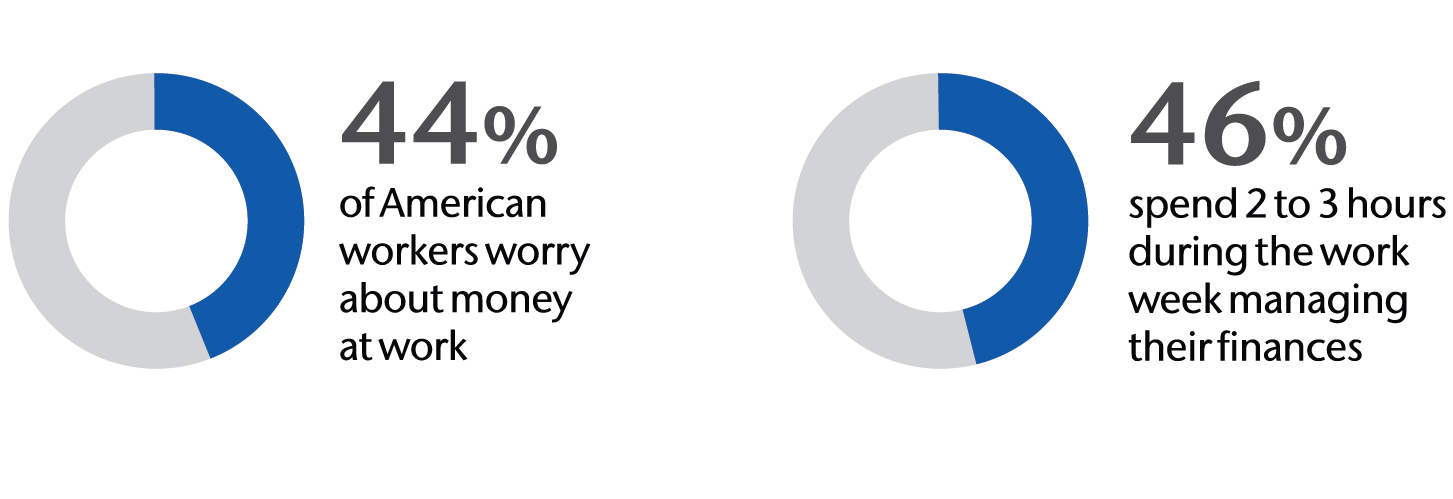
In fact, a 2013 Harris Poll conducted for Purchasing
Power, found that 44% of American workers are worrying
about money at work, while 46% are spending two
to three hours during the work week managing
their finances.
Staff who have the knowledge to manage their
finances outside of work effectively are likely to have
much lower rates of stress and will thus be more likely to
perform at their best when they do come into the office.
What are the Business Benefits of a
Financially-fit Workforce?
While helping employees to manage their finances is an
easy way to reduce stress and help employees achieve
better outcomes in their personal lives, there are certainly
other reasons why number-savvy staff can help build
a better business. Here are a couple of the biggest
advantages:
Building a better compensation package: With
employee wage growth less certain now than it has
been in the past, it's important for employers to think
about the full range of benefits and opportunities
they can offer to staff. Financial education can act as a
complement to the salary, helping staff to manage their
existing wage better and thus develop a better
perception of their overall pay package Stronger employee retention: Workers aren't just
looking for a job that pays the bills, so companies
need to create a benefits package that can keep
their staff engaged and interested in their work.
Up-skilling opportunities like financial education
demonstrate care and - particularly when coupled
with other well-being initiatives - can play a key
role in attracting and retaining quality talent
Building a comprehensive financial education program
within your business has clear benefits, both for
employees and the company, as a whole. As businesses
look to boost employee well-being both in the office and
in their spare time, financial education is a great way to
build this focus, so that both you and your employees can
reap the benefits.
|