Given the turbulent economic environment, organizations are setting clear, compelling talent and rewards strategies
to meet business requirements. Central to this strategy is engaging key talent and sustaining workforce productivity.
Though, for quite some time now organizations have been talking about investing in key talent, the rigor, with which
they are implementing programs targeted for this segment has definitely seen an increase.
We recently concluded our 17th Annual Salary Increase Survey 2012-13, and as per the survey results majority of
organizations reported introducing/improving programs for key talent as one of their top priority for 2013. 83% surveyed
organizations stated they have a differentiated rewards strategy for the vital few and take targeted actions to retain them.
Focus on the Intangibles
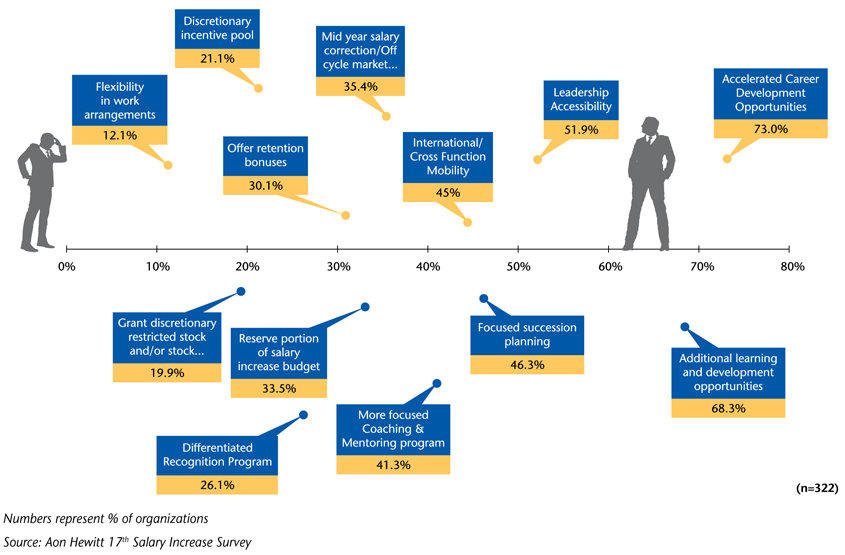
While compensation continues to be popular, organizations are focusing more on experiential rewards to deliver a
distinctive employment deal. Accelerated career growth, international/cross-functional mobility, focused succession
planning, and coaching and mentoring have taken precedence over compensation as top retention measures for key talent.
Compensation Still an Integral Piece of the Puzzle
Our survey results revealed that organizations are looking at multiple strategies to create sharp differentiation in pay
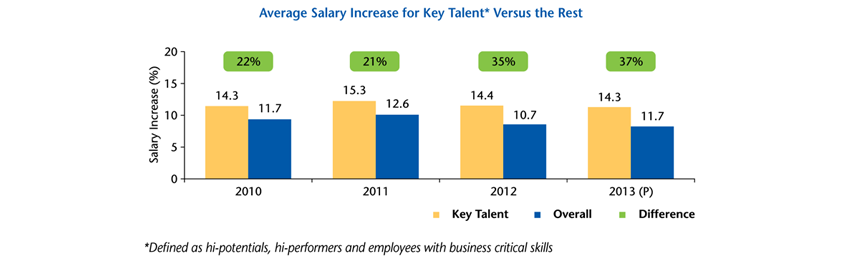
between key talent and the rest. 'Paying above the Market' continues to top the charts. Organizations continue to award
higher salary increases to their key talent and each year, we are seeing the gap widen.
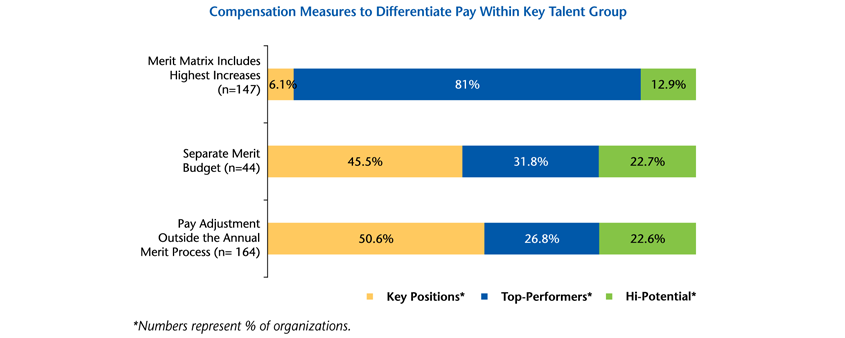
What is interesting to note is that
even within the key talent group organizations have a differentiated strategy to manage increments in pay. For top performers, majority (81%) of organizations reported paying higher salary increases, whereas for critical positions, pay adjustments outside the annual merit process was reported as a more popular strategy. For the hi-potential group, the response was relatively low across these measures. One of the reasons for the same could be that organizations rely more on experiential rewards (accelerated career growth, etc.) to create a differentiated employment deal for their hi-potentials.