
Part 5 - The Implications of Technology and AI for Informed Consent
Whilst AI used to be the stuff of science fiction, it is increasingly an everyday reality with new technology constantly being introduced and adopted within healthcare. Here we explore this new reality with Benjamin Newall, Senior Associate, and Stuart Keyden, Partner, from DAC Beachcroft and ask, ‘what does AI and technology mean for Informed Consent?’
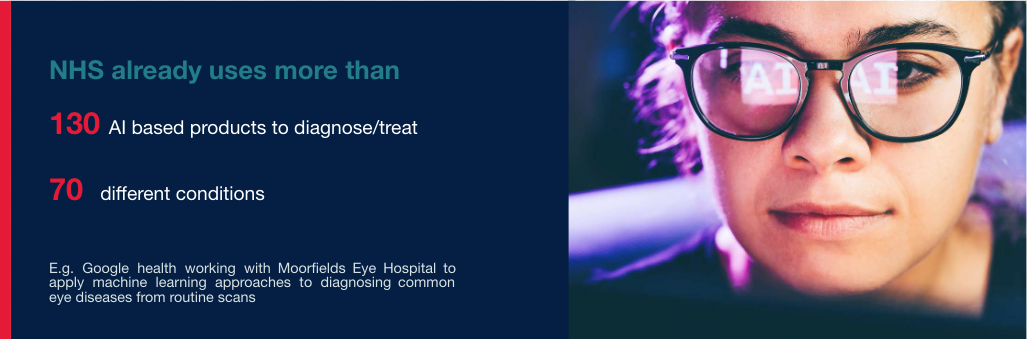
There are several questions to consider from a legal perspective, which are all interesting given we do not yet know what the answers are. “It is an unfortunate truth that the law is always playing catch up with developments in ‘real life’” Stuart Keyden, Partner, DAC Beachcroft.
Here are three considerations principally related to the law as it has recently developed:1. To what extent do patients need to be informed of the role of AI in their treatment? Is there a Montgomery ‘gap’?
“My view, based on the cases that have been reviewed as part of this Insight series, is that the answer to this question is ‘yes’ – patients should be informed of the role of AI. That would be entirely consistent with Montgomery itself and the importance rightly placed on patient autonomy” Stuart Keyden, Partner, DAC Beachcroft.
It is also important to remember that the Montgomery Duty (see Aon Informed Consent Insight Series – Part 1: Your Duty Explained for more information on Montgomery) only discusses reasonable risks and alternatives.
“As things currently stand, the role of technology or AI is not neatly covered within the Montgomery Duty, as it is currently formulated. So, I think it is fair to say that we do have a ‘gap’ in the context of technology and AI.” Stuart Keyden, Partner, DAC Beachcroft.
2. Will the Duty become broader?
“Whilst some significant limitations have been placed on the consenting duty by the Courts, we have also seen some creep, with the duty expanding slightly to include discussion around benefits in addition to just material risks. Given the technology and AI ‘gap’, a broadening of the duty is likely in due course, but at this stage it is simply impossible to know the extent to which it will broaden. However, it is not inconceivable that, ultimately, clinicians will be under a duty to understand how the technology operates and the material risks and benefits associated with the technology.” Stuart Keyden, Partner, DAC Beachcroft.
3. To what extent will clinicians need to understand how the technology operates?
If the scope of the consenting duty broadens in this way, how far is this likely to go?
“As well as complex physiology, is it really reasonable for clinicians to also understand complicated technical engineering and the risks associated with it, particularly when some risks will still be unknown and may not emerge for some time (if ever)?
Whilst clinicians currently have some protection from the Duce case (see Aon Informed Consent Insight Series – Part 2: Lessons Learned from Post Montgomery Cases for more information on Duce), - which tells us that a clinician is not required to warn of a risk that s/he cannot reasonably be taken to be aware, what is absolutely clear is that we can expect some important clarification from the courts around the scope of the consenting duty in the coming years” Stuart Keyden, Partner, DAC Beachcroft.
Only time and the intervention of the Courts will really answer these questions. Whilst this does not necessarily make comfortable reading for those pushing technological frontiers it is worth noting the courts do take into account boundaries of knowledge at the time the matter they are considering occurred.
In the interim consider the following top tips from Benjamin Newall, Senior Associate, DAC Beachcroft.
Tips to Avoid Negligence Claims relating to AI and Technology
-
Provide patients with a general explanation of how the AI programme or system works.
Patients are likely to find the AI element of their treatment daunting, so it is important to familiarise them with this.
-
Explain the healthcare provider’s experience using the AI programme or system.
The importance of the clinician understanding how the technology works really comes in here. Not being able to answer a patient’s question on this topic would undermine the clinician’s credibility and be concerning for the patient.
-
Describe to patients the risks versus potential benefits of the AI technology e.g., compared to human accuracy.
“There is a risk that we are entering into an era where [clinicians] are possibly being pushed to use the AI technology over what is currently available and so that discussion needs to take place about what really is best for the patient and what they would like to do” Benjamin Newall, Senior Associate, DAC Beachcroft.
-
Discuss with patients, the human versus machine roles and responsibilities in diagnosis, treatment, and procedures.
The patient needs to understand if the machine, rather than the doctor, is carrying out the procedure or which specific aspect(s) of the procedure. The doctor and the patient need to be clear on where the responsibility for the provision of the AI aspect of the procedure ultimately lies.
-
Describe any safeguards that have been put in place, such as cross-checking results between clinicians and AI programmes.
It will be important to put patients at ease by explaining the safeguards in place associated with any risks of a procedure being carried out where AI or technology is employed. Those risks will also extend to information being passed from the clinician to the technology.
“There is likely to be an introduction of new systems, which differ from those currently being used. It is important that these systems match up to avoid a disconnect or loss of a patient’s records.” Benjamin Newall, Senior Associate, DAC Beachcroft.
-
Explain issues related to the confidentiality of patient’s information and any data privacy risks.
It is important that the treatment provider is aware of how any patient data is stored on any new technology or systems, and that this is stored securely. Patients should also be made aware of how their personal data is protected by the treatment provider.
With AI and technology, we are still at an early stage on the voyage of discovery. When you learn lessons, it is important to share these experiences with colleagues and enable others to learn and make practice safer.
Should a claim come in then you will find further tips for handling these in Aon Informed Consent Insight Series – Part 6: Legal Insight – Issues with the Consent Process.
For more information contact [email protected]
Whilst care has been taken in the production of this article and the information contained within it has been obtained from sources that Aon UK Limited believes to be reliable, Aon UK Limited does not warrant, represent or guarantee the accuracy, adequacy, completeness or fitness for any purpose of the article or any part of it and can accept no liability for any loss incurred in any way whatsoever by any person who may rely on it. In any case any recipient shall be entirely responsible for the use to which it puts this article. This article has been compiled using information available to us up to 10/06/2024.