Fortune Favors the Fittest
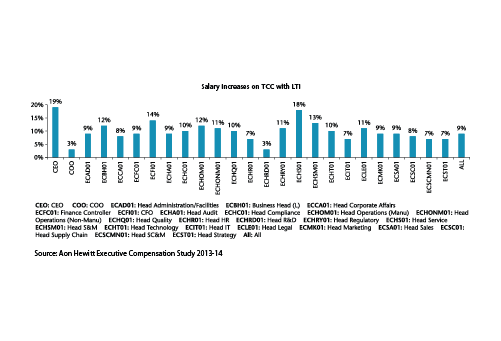
The CEO position analysed approximately 112
incumbents showing an average increase of 10% on fixed
pay, 13% on fixed + variable and 19% on fixed + variable
+ LTI. This indicates an increasing focus on loading
compensation on performance and variable payments
thereby providing executives an opportunity to earn higher
on meeting and exceeding set performance targets.
Another interesting observation is an increase in
the number of companies benchmarking executive
compensation on anchors including annual variable pay
and long-term pay by 15% and 27% respectively over the
previous year. This reflects the increasing importance of
these elements while comparing market pay levels and to
arrive at the realistic pay differentials to the market and to
the peer group.
The regulations around pay for performance as well
as investor and shareholder activism in India is gradually
picking up pace. Promoters and shareholders are increasingly
voicing their concern over disproportionate increase in
the levels of pay to executives in light of actual financial
performance. Over the last quarter, there is a sudden splurge
of companies moving towards business performance linkage
during their discussions on executive pay increase. The study
indicates that 53% of the participants in the survey are either
in talks to change their compensation structures or have
implemented a performance and retention-based plan to
counter disproportionate disbursement of compensation to
top executives.
Regulations around pay for
performance as well as investor
and shareholder activism in India
is gradually picking up pace.
In the current year, we noted a far greater focus
on long-term pay than on annual incentives - while
certain industries such as banking have had regulatory
requirements drive this change, a wide variety of other
industries also seem to be adopting a greater focus to
incentives being delivered over 3-4 years than through
annual incentives. In fact, the study noted a direct
correlation between higher compensation increases and
higher mix of short and long-term variable components in
pay. This is presented in the chart below.
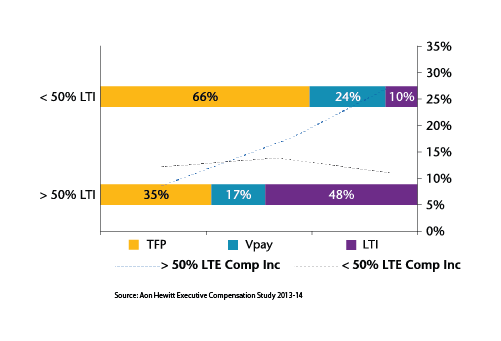
Companies where significant portion of compensation
is being delivered through variable components (short and
long-term incentives >50% of total compensation) showed
an average salary increase of 20% compared to companies
where pay mix is skewed towards fixed payments. This
compensation increase factor again gets loaded more onto
the long-term component than the annual component of
pay. We note that mature Indian companies are raising the
|