Eighty-Two Percent of Workers in India are Considering Changing Employers in 2025, Aon Study Reveals
NEW DELHI (30 April 2025) –
Aon plc (NYSE: AON), a leading global professional services firm, has released results from its
2025 Employee Sentiment Study. The global study of more than 9,000 employees across 23 geographies, including the U.S., UK, China, India and Australia, found that a majority of workers in India are considering changing employers.
The top five valued benefits for the Indian workforce are:
- Work-life balance programs
- Medical coverage
- Career development
- Paid time off
- Retirement savings
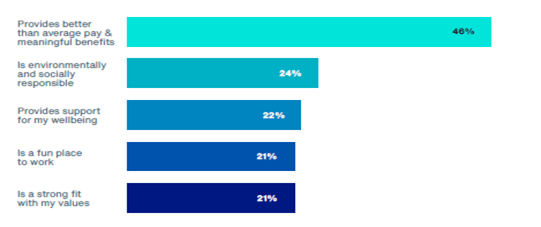
Top five most influential characteristics to attract employees in India:
Nitin Sethi, head of Talent Solutions for India, at Aon, said, “Until recently, very few companies considered how benefits, wellness and healthcare programs could shape their employer brand and employee value proposition. Post-Covid, we are seeing changes as employees increasingly value these programs, and companies are more actively branding and communicating their availability to current and future employees. A multigenerational workforce is accelerating this change, while advanced technology is making it easier to implement these programs. In the next decade, companies that excel in benefits, health and wellness will have a significant opportunity to position themselves as best-in-class employers.”
Growing demand for medical coverage
Medical coverage was one of the highest valued benefits across all generations among those surveyed in India, with Gen X and Gen Y rating it higher than Gen Z. Gen Z rated work-life balance as the top-valued benefit. Additionally, 76 percent of those surveyed said they would be willing to sacrifice existing benefits for a better choice of benefits. This highlights the necessity for businesses in India to align their total rewards and benefits strategies with the changing expectations of their workforce.
“Employees are increasingly aware of the advantages of medical and life benefits,” said Ashley Dsilva, head of Health and Wealth Solutions and director and principal officer for India at Aon. “The importance of retirement and financial planning among the young workforce is surprising. This shift may be due to a better understanding of the impact of inflation on daily living, especially since entry-level wages have stagnated in many sectors. At the same time, younger employees have increased debts with a substantial portion taking on personal loans before age 30. Employers have a clear opportunity to highlight the value of their benefits and emphasise financial wellbeing in their offerings and enhance employee engagement through innovative communication methods."
The study also found that 10 percent of surveyed employees in the country had no confidence that their employer is investing in their skills development and training to prepare them for the future of work. At the same time, employees surveyed showed a higher commitment to improving their AI skill set, with 43 percent feeling motivated to develop new skills to stay relevant when asked about AI compared to 35 percent globally.
Read Aon’s Employee Sentiment Study
here.
About Aon
Aon plc (NYSE:AON) exists to shape decisions for the better — to protect and enrich the lives of people around the world. Through actionable analytic insight, globally integrated Risk Capital and Human Capital expertise, and locally relevant solutions, our colleagues provide clients in over 120 countries with the clarity and confidence to make better risk and people decisions that protect and grow their businesses.
Follow Aon on LinkedIn, X, Facebook and Instagram. Stay up-to-date by visiting the Aon Newsroom and sign up for News Alerts here.
Disclaimer
The information contained in this document is solely for information purposes, for general guidance only and is not intended to address the circumstances of any particular individual or entity. Although Aon endeavours to provide accurate and timely information and uses sources that it considers reliable, the firm does not warrant, represent or guarantee the accuracy, adequacy, completeness or fitness for any purpose of any content of this document and can accept no liability for any loss incurred in any way by any person who may rely on it. There can be no guarantee that the information contained in this document will remain accurate as on the date it is received or that it will continue to be accurate in the future. No individual or entity should make decisions or act based solely on the information contained herein without appropriate professional advice and targeted research.