People Risks Are Rising: Here’s How U.S. Benefits Are Stepping Up

People Risks Are Rising: Here’s How U.S. Benefits Are Stepping Up
Workforce

06 of 12

This insight is part 06 of 12 in this Collection.

July 23, 2025 12 mins

People Risks Are Rising: Here’s How U.S. Benefits Are Stepping Up

People Risks Are Rising: Here’s How U.S. Benefits Are Stepping Up

Aon’s 2025 U.S. Health Survey shows how leading employers are responding to rising people risks by evolving their benefit strategies to address affordability gaps, legal pressures and rising employee expectations.

Key Takeaways
  1. Employers are managing rising costs more strategically through predictive analytics, steerage to high-quality, cost-effective care and tighter pharmacy controls.
  2. Employers are driving health equity by improving access to primary care, expanding mental health services and addressing social factors that impact wellbeing.
  3. Personalized benefits are becoming a key differentiator, with AI tools, voluntary benefits and policies enhancing workforce engagement.

A thriving organization relies on thriving employees. It’s more important than ever to craft benefits strategies that focus on reducing the people risks that impact employee performance, market reputation, financial sustainability and legal liabilities.

Here are key findings from Aon’s 2025 U.S. Health Survey on how employers are responding to people risks in their benefit strategies.

Achieving Financial Sustainability

Amid cost volatility and skepticism about new strategies, employers are staying focused on results. They are improving care quality, addressing key cost drivers, and demanding fair pricing and transparency from vendors to ensure long-term value. Employers are using the following strategies:

1. Easing Access to High-Value, Lower-Cost Care

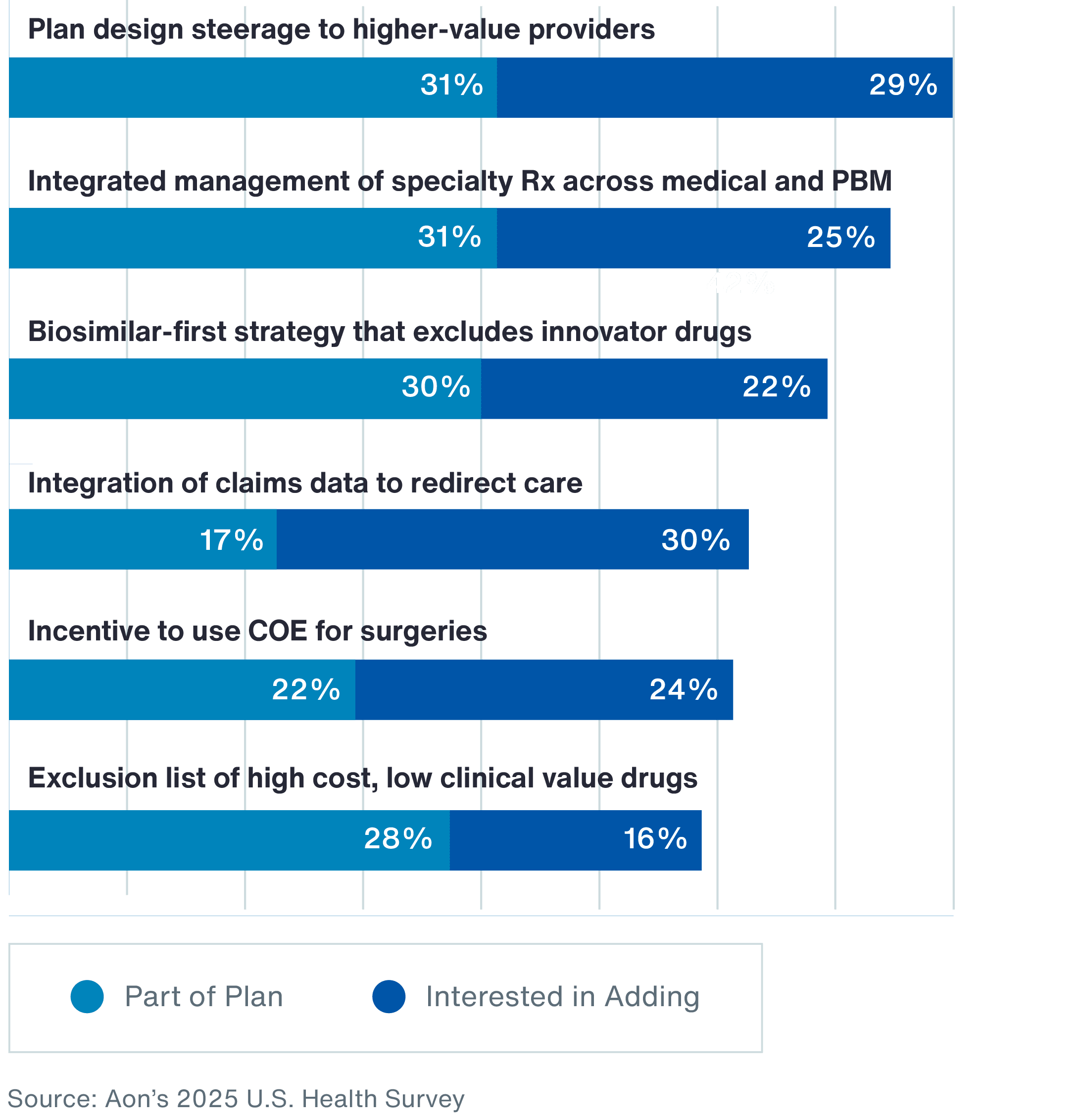
Leading-edge employers are intentionally and methodically removing low-value care pathways and making it easier to choose higher quality and more cost-effective care. Nearly a third (31 percent) are steering employees toward better, lower-cost providers through plan design, with another 29 percent considering it. This approach helps employees make smarter healthcare choices while reducing costs.

Many are also incentivizing centers of excellence and surgery networks to drive better outcomes at lower costs. Currently, 22 percent of employers are encouraging their employees to use these networks for surgeries, with 24 percent more considering this approach. Surgery networks can significantly lower costs and improve the quality of care, making them a win-win for both employers and employees.

Chart 1: Strategies Employers are Adopting for Higher Quality, Cost-Effective Care

2025 US Health Survey Chart 1

60%

of employers are either already steering employees toward better, lower cost providers through plan design or considering it.

Source: Aon’s 2025 U.S. Health Survey

2. Dialing up Focus on Cost Drivers

Employers are pursuing a variety of strategies to address the future cost drivers that contribute to a projected 45 percent increase in healthcare costs by 2030.

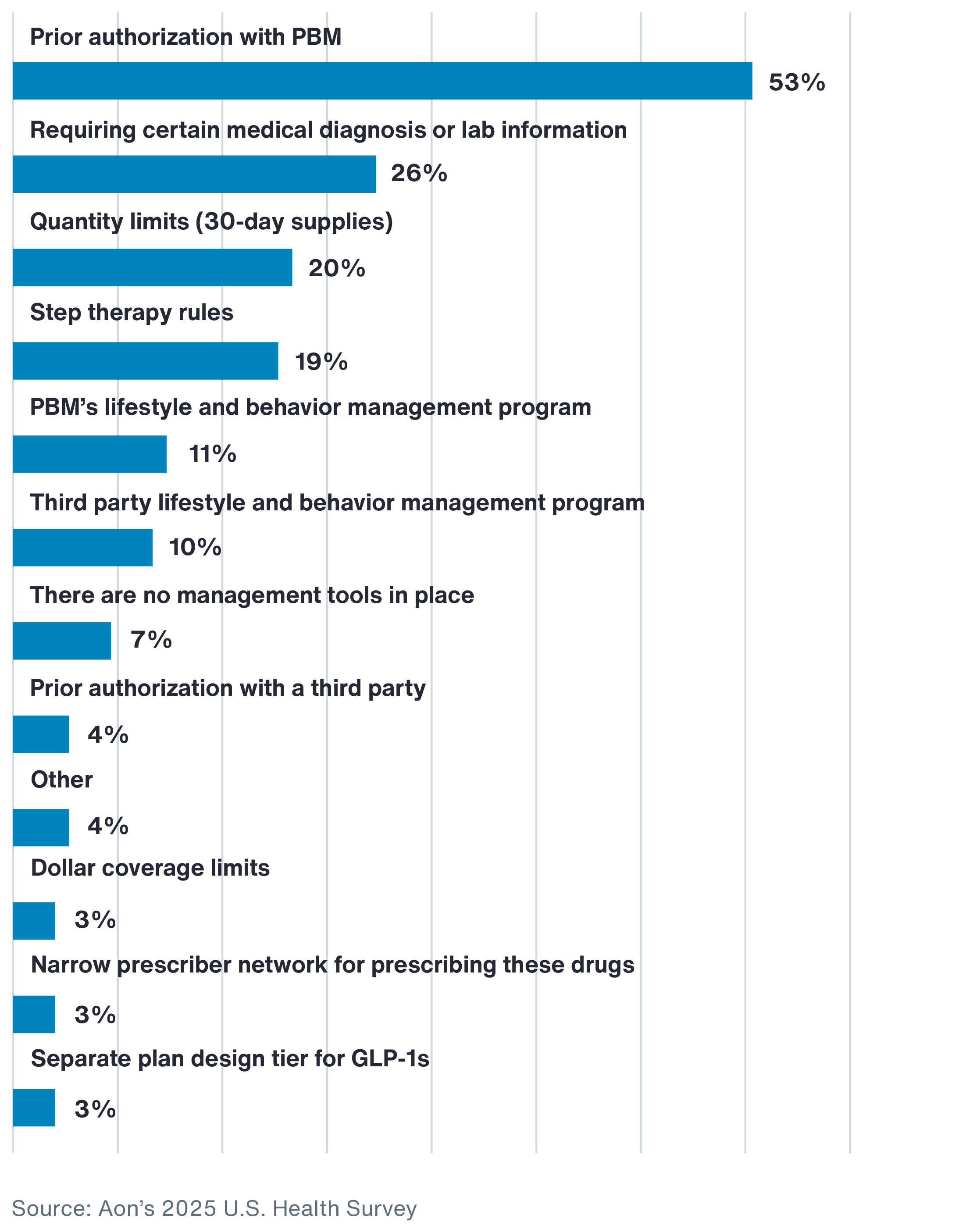
The popularity of diabetes and weight management medications known as GLP-1s is directly affecting employer health plan strategies. After increasing employee payroll contributions, the second most common specific action being taken to control rising costs is tighter management of GLP-1s. These medications drive an increasing share of pharmacy expenses, with 49 percent of employers covering GLP-1s for weight loss.

About half (53 percent) of employers require prior authorization for GLP-1s. Only 26 percent mandate a specific diagnosis or lab results for coverage, which can help to ensure appropriate use.

Chart 2: Strategies Companies Have Implemented or Planned for 2025 Given Current GLP-1 Coverage Approach

2025 US Health Survey Chart 2

High-cost claimants are another key cost driver. A majority of employers (65 percent) rely on carrier clinical programs to manage these individuals, but today’s complex claims environment demands a more strategic approach. Some employers are turning to predictive modeling — such as Aon’s Health Risk Analyzer — to identify emerging risks, with 26 percent already using predictive analytics and another 28 percent considering it. Other emerging strategies include hospital bill audits (with 11 percent already doing this and 20 percent considering it) and implementing fully insured carve-out programs for high-cost services like gene and cell therapy (4 percent have it in place and 18 percent are considering).

Rising costs driven by the growing prevalence and severity of chronic conditions add further pressure. Yet only 8 percent of employers currently offer plan design incentives to support adherence to chronic care guidelines. However, that number is set to grow with 26 percent exploring incentives to improve health outcomes for high-risk populations.

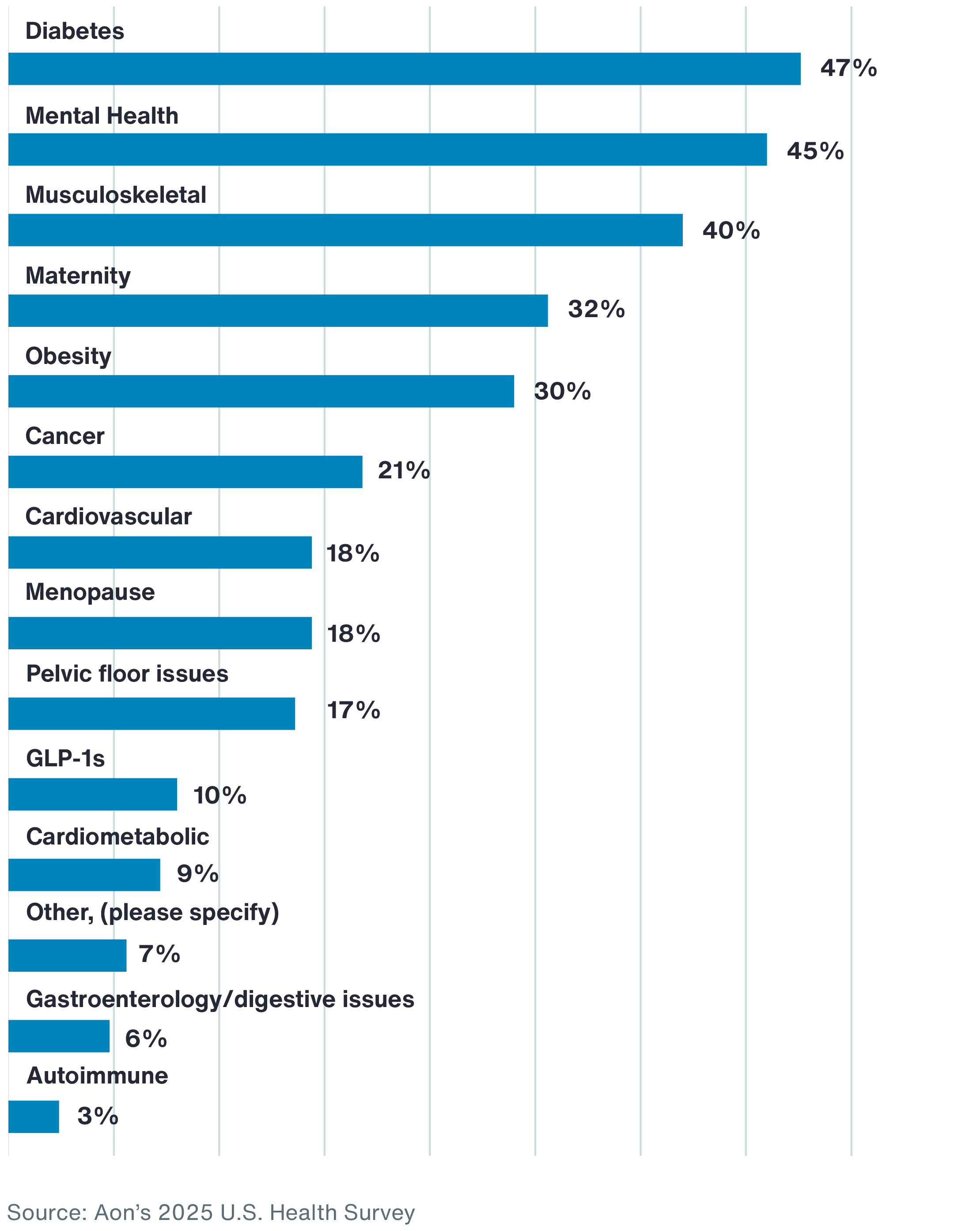
Many employers are relying on digital health solutions to help individuals manage their chronic conditions, with diabetes and mental health topping the list.

Chart 3: Companies Using Digital Health Apps or Other Specialized Solutions to Address the Following Health Conditions

2025 US Health Survey Chart 3
3. Requiring Vendor Transparency

So far, only a small number of employers have taken action to drive transparency and appropriate limits on vendor partner pricing models, but interest is growing.

Transparent pharmacy pricing is gaining traction as a tactic for controlling costs. The rising costs of prescriptions, breakthrough drugs and regulatory pressures are accelerating the shift. Twenty-nine percent of employers have already adopted a transparent pharmacy benefit manager (PBM) pricing model, and another 28 percent are considering it. This approach helps promote fair and accurate medication pricing while keeping expenses in check. An emerging trend is using alternative models to traditional PBMs, such as disintermediated pharmacy benefit administrators. While only 4 percent are doing that today, 18 percent are considering it.

Employers are also shifting away from fee-for-service in their medical plans. Instead, they are exploring value-based and alternative payment models that focus on appropriate cost and utilization and improving health outcomes. While adoption of value-based contracts is still low — just 5 percent have made the switch — momentum is building, with another 14 percent considering a transition in the next one to three years. Outcome-based contracts for gene and cell therapy show a similar trend: Only 1 percent have one in place today and an additional 18 percent are considering.

Breaking Down Health and Wellbeing Barriers

To address the workforce health challenges that can lead to poor on-the-job performance, employers are taking an intentional approach to understanding key barriers to health and wellbeing. There are three targeted strategies that can help improve affordability and health equity.

1. Aligning Employee Affordability

Employers are improving affordability by focusing on foundational care, including primary care, mental health and prescription drugs. Nearly half (47 percent) of employers are offering or plan to offer low-cost primary care services, such as plan design with low copays or waived deductibles. Sixty-two percent are focused on improving prescription drug affordability, while 65 percent offer or are considering digital tools and self-guided resources to support emotional wellbeing. Additionally, 35 percent have expanded or are evaluating benefits for employees with disabilities, such as hearing aids and assistive devices.

These efforts reflect a broader commitment to more cost-effective healthcare benefits.

2. Removing Barriers to Health

Employers are taking meaningful steps to break down systemic barriers to individual health and wellbeing. These challenges can come in the form of personal circumstances or plan design limitations that make it difficult for employees and their families to take care of their health.

Employees with caregiving responsibilities often struggle to find time for their own healthcare needs. Half of employers offer or are considering paid caregiver leave. What’s more, Aon research shows that 23 percent of employees live in areas with high social determinants of health (SDoH), such as economic instability, food insecurity and poor access to healthcare services. Nearly half (43 percent) of employers are offering or considering benefits that address SDoH.

Plan design can also be a barrier to individuals receiving the care they need. For example, out-of-pocket expenses for cancer diagnostic services can prevent individuals from following up on cancer screenings that reveal potential problems. Looking ahead, 40 percent of employers are offering or considering full coverage for cancer diagnostic services, along with greater access to screenings, personalized medicine and navigation support. 

3. Scaling Specialized Care Access

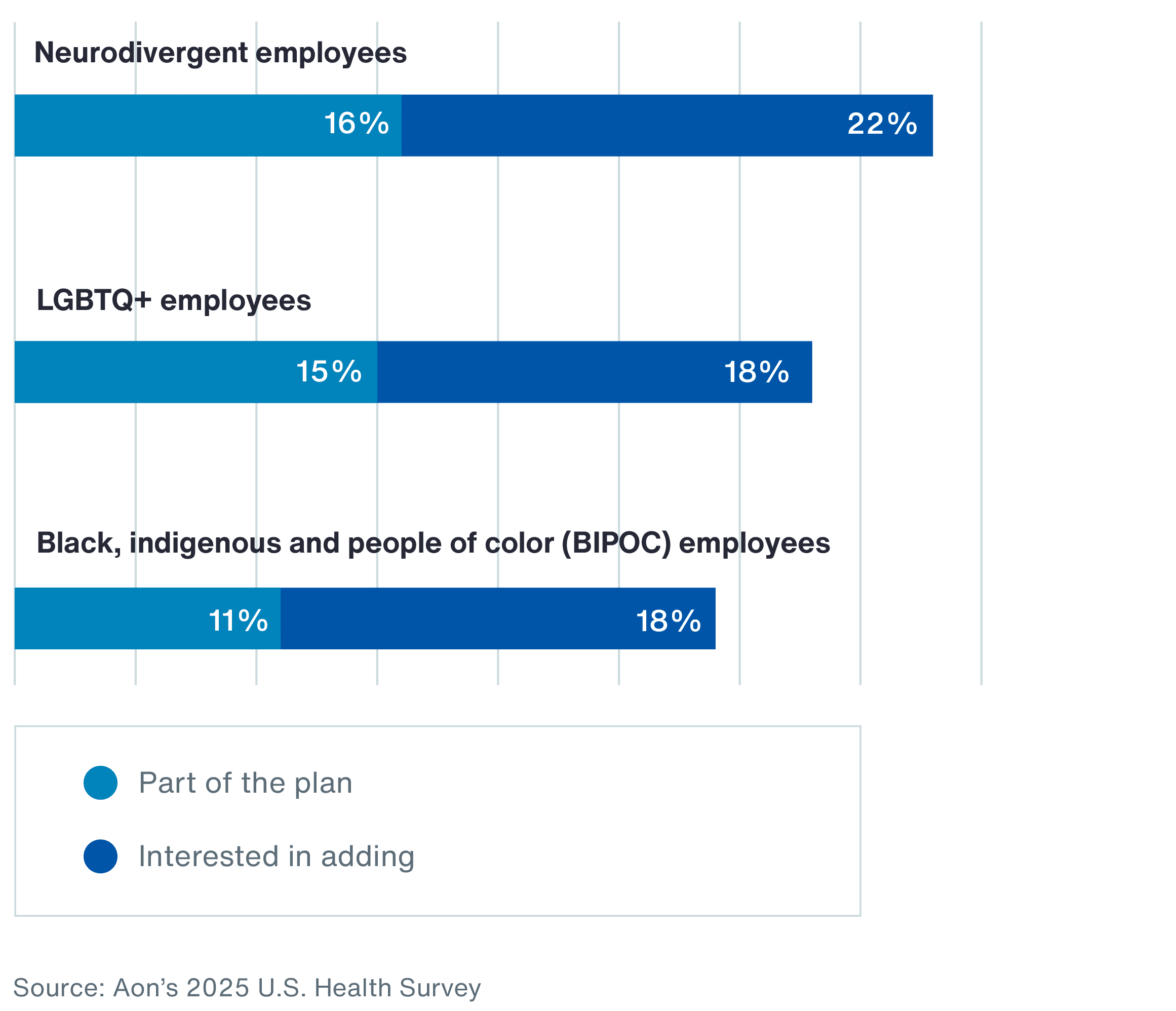
Access to care can be a challenge for individuals with specialized healthcare needs. Many employers are taking action by offering more inclusive and supportive care to different communities. For example, more employers are expanding specialized care for neurodivergent, LGBTQ+, and black, indigenous and people of color (BIPOC) populations.

Chart 4: Employers Offering or Considering Specialized Care and Support for the Following Groups

2025 US Health Survey Chart 4

65%

of employers offer or are considering digital tools and self-guided resources to support emotional wellbeing.

Source: Aon’s 2025 U.S. Health Survey

Seventy-one percent have already implemented inclusive benefits and policies as part of a broader inclusive benefits strategy. Health equity is another priority, with 42 percent of employers addressing disparities in care.

Performing Proactive Governance

Rising regulatory pressures and recent lawsuits over PBM contracts and drug pricing have put fiduciary responsibility front and center. In response, employers are tightening vendor oversight, enhancing governance and closely monitoring programs to stay ahead of risk.

1. Increasing Vendor Oversight

As healthcare costs rise, employers are taking a more strategic approach to vendor management. Legal risks are also driving change, underscoring the need for robust oversight of vendor contracts and pricing for prescription drugs and healthcare providers. To reduce litigation risk, plan sponsors should assess vendor selection and due diligence to ensure plan-appropriate outcomes and thorough documentation.

Forty-two percent of employers are reassessing their vendor strategy to address healthcare costs, with 79 percent conducting regular contract reviews and 78 percent performing market checks to maintain cost competitiveness. The majority (61 percent) of employers have begun evaluating stop loss coverage annually. These practices help employers secure high-quality, cost-effective solutions while promoting better governance.

2. Addressing Fiduciary Liability

Plan sponsors must carefully select and monitor their service providers to meet fiduciary obligations and minimize liability risk. As scrutiny increases, employers are leveraging more tools — such as audits and HIPAA risk assessments — to ensure compliance and strengthen their health plan oversight.

Progress is being made, with 74 percent of employers reviewing their welfare plan governance in the past year. However, there’s still room for improvement. Establishing a welfare plan fiduciary committee can enhance oversight and reduce risk, yet only one in three employers have one in place.

3. Shifting to Proactive Operating

More employers recognize that regular vendor assessments are key to maintaining a well-performing health plan. Fifty-three percent conduct routine claims audits to ensure accuracy and accountability, while 28 percent hold monthly or quarterly “grand rounds” reviews with their medical management vendor to track high-cost claimants and improve care coordination. These proactive strategies help control costs and drive better plan outcomes.

43%

of employers are offering or considering benefits that address social determinants of health.

Source: Aon’s 2025 U.S. Health Survey

Using Benefits to Create Meaning and Value

Nearly half (47 percent) of employees surveyed for Aon’s 2025 Employee Sentiment Study say competitive pay and meaningful benefits are their top priorities when evaluating employers. Aon’s 2025 U.S. Health Survey reinforces this: 81 percent of employers say benefits are important or extremely important to attracting and retaining talent.

Many employees have come to expect retirement savings and general health coverage as table stakes. Employers who go beyond the standard with tailored, high-impact benefits gain a clear advantage in attracting and retaining top talent.

1. Leaning into Technology to Personalize Benefit Communications

Employers are starting to embrace newer technologies to better educate and communicate with employees.

Notably, more employers are turning to artificial intelligence (AI) and data-driven strategies to enhance care quality and manage costs. Half of employers now use AI in some form to educate employees and support better health decisions — leading to more informed choices and potential cost savings.

Employers are steadily growing more comfortable with AI in benefits, particularly in its ability to enhance personalization through education, communications and proactive nudges: Seven in 10 employers are at least somewhat comfortable with AI answering generalized benefits questions.

There is also rising interest in using AI to deliver more tailored messaging. Employers are increasingly focused on leveraging data in an integrated way across modern communication channels. In fact, interest in using claim data and preference information to personalize messaging has increased by 26 percent.

70%

of employers are at least somewhat comfortable with AI answering generalized benefits questions.

Source: Aon’s 2025 U.S. Health Survey

2. Curating Offerings That Reflect Individual Identity

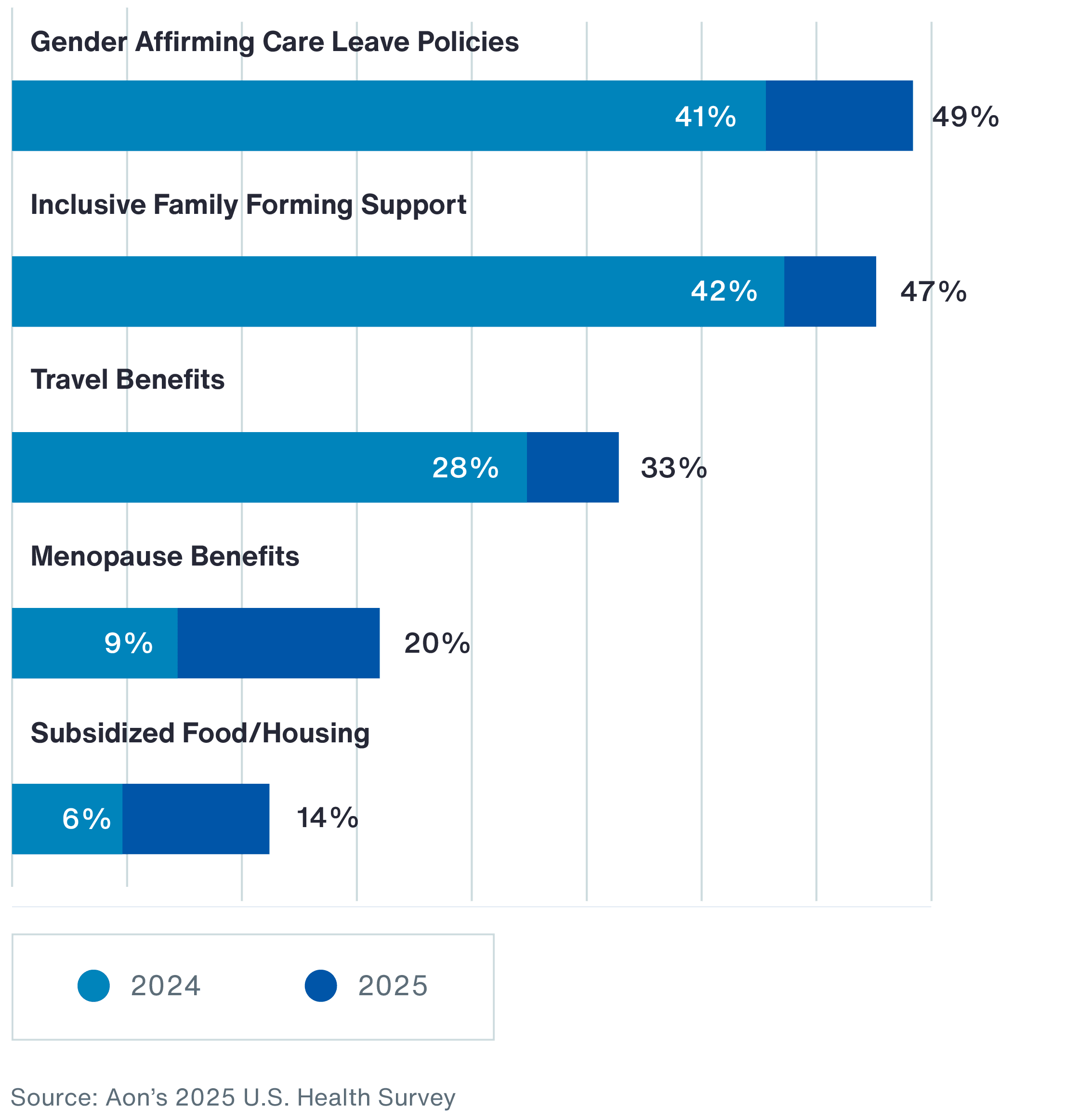
Employers are prioritizing benefits that support all life stages and strengthen workplace culture — and they’ve made significant progress toward inclusive coverage and policies to address diverse workforce needs.

Chart 5: Inclusive Benefits Currently Offered

2025 US Health Survey Chart 5

88%

of companies are using benefits to advance their inclusive people strategies.

Source: Aon’s 2025 U.S. Health Survey

Voluntary benefits are now a strategic advantage, providing employees with greater financial security and personalized healthcare solutions. For employers, these benefits drive higher engagement, loyalty and overall workforce wellbeing. Seventy-six percent offer voluntary or supplemental benefits to meet individual employee needs.

Accident, critical illness and hospital indemnity insurance continue to add value by filling gaps in traditional health coverage. More employers are also offering identity theft protection to address the growing threat of cybercrime.

3. Fostering Holistic Wellbeing

Employers are expanding their focus beyond traditional healthcare benefits to better support overall employee wellbeing. Eighty-two percent believe they play a significant role in supporting physical, emotional, social and financial wellbeing. Meanwhile, 72 percent offer wellbeing incentives. Among those investing in incentives, most provide $500 or more.

Despite this commitment, few employers see their wellbeing strategies as highly effective, highlighting the need for stronger evaluation methods. Only 12 percent rate their current approach as highly effective. To address this gap, seven in 10 employers are exploring benefits that help employees navigate financial challenges, including financial wellbeing tools, discount platforms and emergency savings programs.

Building Benefit Strategies for Long-Term Resilience

The future of employer-sponsored benefits is not just focused on managing cost. It’s about reducing people risk across every dimension. By aligning benefit strategies to address performance, reputation, financial sustainability and legal exposure, employers are actively strengthening workforce and organizational resilience.

$500+

For companies offering wellbeing incentives, most are valued at $500 or more.

Source: Aon’s 2025 U.S. Health Survey

Health and Benefits

Capabilities

Health and Benefits

Organizations that act now will not only better manage rising costs, but also build a healthier, more engaged workforce equipped to drive long-term growth.

Aon’s Thought Leaders
  • Janet Faircloth
    Senior Vice President and Thought Leadership Leader, Health Solutions, North America
  • Neal Mulville
    Vice President, Program Leader, Thought Leadership, North America
  • Lindsay Dower
    Assistant Vice President, Innovation and Commercialization, North America

General Disclaimer

This document is not intended to address any specific situation or to provide legal, regulatory, financial, or other advice. While care has been taken in the production of this document, Aon does not warrant, represent or guarantee the accuracy, adequacy, completeness or fitness for any purpose of the document or any part of it and can accept no liability for any loss incurred in any way by any person who may rely on it. Any recipient shall be responsible for the use to which it puts this document. This document has been compiled using information available to us up to its date of publication and is subject to any qualifications made in the document.

Terms of Use

The contents herein may not be reproduced, reused, reprinted or redistributed without the expressed written consent of Aon, unless otherwise authorized by Aon. To use information contained herein, please write to our team.

More Like This

View All
Subscribe CTA Banner