How Insurers can Protect Morning Coffee from Climate Threats

How Insurers can Protect Morning Coffee from Climate Threats
November 11, 2025 6 mins

How Insurers can Protect Morning Coffee from Climate Threats

How Insurers can Protect Morning Coffee from Climate Threat

Climate change is brewing trouble for coffee. Droughts threaten supply, but smart climate analytics and built-in insurance are helping food companies safeguard beans and cut financial risk.

Key Takeaways
  1. Intensifying droughts due to climate change are increasingly threatening coffee availability, affordability and the livelihoods of the millions of farmers.
  2. To protect supply chains, food and drink companies must go beyond traditional risk management by using climate analytics and agronomic insights.
  3. By embedding insurance in supply chain strategies, food and beverage companies can secure reliable coffee supply, reduce climate-related financial risk and drive long-term growth.

Waking Up to the Growing Climate Risk 

Across Brazil, Colombia and Vietnam, the perfect storm is brewing for coffee producers and consumers alike. The world’s top three coffee-producing countries are facing intensifying droughts due to climate change, threatening to disrupt the global supply chain and shake up your morning cup. 

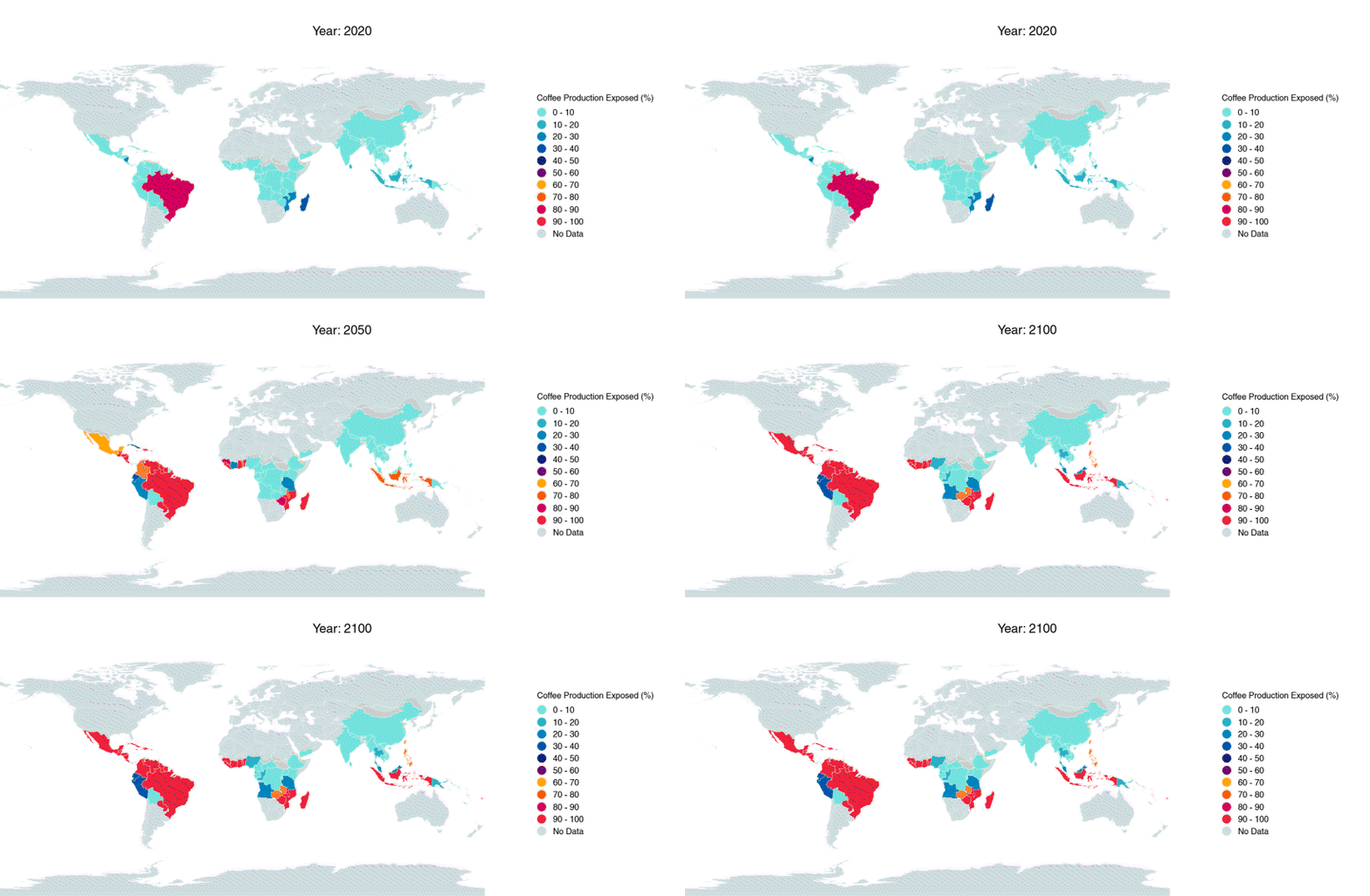
Take Brazil for example, which will host the United Nation’s 30th annual Climate Change Conference (COP30) from November 10-21. Over the last 30 years, the country has suffered $139 billion in drought-related losses, with climate change accelerating the threat1. According to new research from Aon’s Climate Risk Monitor, high drought conditions are projected to threaten double the amount of global coffee crops by 2050 compared to today, or roughly 54% of total global supply. The risk is a stark, real-world reminder of the supply chain disruption posed by climate, a concern that ranks seventh among organizations surveyed in Aon’s Global Risk Management Study.  

Projected Impact of Drought on Global Coffee Supply by 2050: 54% at Risk

Did you know? According to data from the World Bank, Brazil and Colombia together account for approximately half of all coffee imports to the U.S.

With 97% of losses due to drought uninsured, the risk to global coffee supply is exposed and without smarter data, alternative risk transfer, and investment in climate adaptation, your daily caffeine fix could become a luxury. This isn’t just about beans—it’s about business, resilience, and the future of one of the world’s most beloved rituals. 

Where Existing Risk Management Tools Fall Short

Traditional risk management strategies, such as diversification of supply chains and hedging in commodity markets, are proving inadequate in the face of climate-driven volatility.

Supply Diversification: 

While diversifying supply sources can mitigate some risks, it’s not a foolproof solution. Climate change impacts are global, and alternative regions may face similar challenges, limiting the effectiveness of diversification.

These solutions alone do not directly protect growers themselves. Socio-economic factors, too, aggravate climate risks in coffee production. For example, a significant amount of coffee is still produced by small-holder farmers who, in Colombia at least, are on average 58 years old2. Climatic events can knock these producers out of the supply chain altogether and in many cases, without a next generation of farmers to take the reins. Some countries are seeing farmers shift away from faming all together, such as in Ghana where cocoa producing farmers are switching to gold mining3.  

Hedging and Forward Purchasing: 

The soft commodity futures markets have periodically come under extreme stress due to climate change impacts, with prices hitting record highs due to poor harvests. This volatility makes traditional futures-based hedging expensive and unreliable.    

Two Ways to Protect Supply Chains

  1. Understand the Data 
    To effectively assess and quantify risk and vulnerability, food and drink companies must leverage climate analytics combined with agronomical insight. By understanding the specific climate risks facing their supply chains, companies can make informed decisions about sourcing, production and investment. Climate analytics provide data-driven insights into weather patterns, temperature changes and rainfall variability, while agronomical expertise offers a deeper understanding of crop resilience and adaptation strategies.
  2. Consider Insurance Solutions 
    Insurance solutions make for an alternative or supplementary risk management tool for managing climate-related risks in the food and drink industry. Unlike speculative market-based tools, insurance provides consistent, accurately priced, and non-speculative risk management options.  

Key benefits include:

  • A-Rated Capacity

    Insurance capacity is backed by A-rated insurers, ensuring reliability and trustworthiness.

  • Abundant and Consistent

    Insurance solutions are widely available and offer consistent protection against climate-related risks.

  • Risk Premium Sharing

    Insurance allows for the sharing of risk premiums across the value chain, providing stability and resilience to all stakeholders.

  • Fixed Premiums

    Insurance offers fixed premiums with no margin calls, freeing up capital otherwise tied in futures.

  • Seasonal Protection

    Insurance provides seasonal protection against yield losses and weather extremes, supporting supply chain resilience.

Global Coffeehouse and the Value of Grower Resilience

Case Study

Global Coffeehouse and the Value of Grower Resilience

A prime example of supply chain resilience in action is a global coffeehouse’s approach to insuring the interests of its farmers. The insurance policy protects against excess rainfall during flowering and a lack of rainfall during fruit growth – delivering seasonal protection against weather extremes and crop yield losses. Unlike market-based tools, this coverage offers a steady, data-driven way to manage risk with clarity and confidence. By insuring farmers, the coffeehouse strengthened its supply chain and enabled adaptive farming programs that promote new practices and climate resilience. This strategy highlights the benefits of farmer-focused coverage, building a more stable and sustainable supply chain.

Conclusion

As climate change continues to challenge the food and drink industry, the need for innovative risk management strategies is clear. By integrating climate analytics, agronomical insight, and insurance solutions, businesses can forge resilient supply chains that not only withstand climate shocks but also uplift farming communities.

Insurers can help close the protection gap with food supply chains – demand and risk capital are there to address the challenge. However, growth depends on flexible products, fresh data and strong partnerships with brokers, clients and local markets. For insurers, closing the protection gap in these supply chains is a geographic diversifier and, as insurance penetration and economic growth evolves in the global south, this area of the market will grow.

Aon’s Thought Leader
  • Dominic Probyn
    Director, Climate Risk Advisory, United Kingdom

General Disclaimer

This document is not intended to address any specific situation or to provide legal, regulatory, financial, or other advice. While care has been taken in the production of this document, Aon does not warrant, represent or guarantee the accuracy, adequacy, completeness or fitness for any purpose of the document or any part of it and can accept no liability for any loss incurred in any way by any person who may rely on it. Any recipient shall be responsible for the use to which it puts this document. This document has been compiled using information available to us up to its date of publication and is subject to any qualifications made in the document.

Terms of Use

The contents herein may not be reproduced, reused, reprinted or redistributed without the expressed written consent of Aon, unless otherwise authorized by Aon. To use information contained herein, please write to our team.

More Like This

View All
Subscribe CTA Banner