Optimizing Your Property Program: A Risk Capital Approach to Manage Volatility

Optimizing Your Property Program: A Risk Capital Approach to Manage Volatility
October 8, 2025 6 mins

Optimizing Your Property Program: A Risk Capital Approach to Manage Volatility

Optimizing Your Property Program: A Risk Capital Approach to Manage Volatility

Risk buyers can build resilience in their property portfolios by implementing a risk capital strategy that utilizes alternative risk transfer sources to access capital and support long-term program stability.

Key Takeaways
  1. The long-term view of property risk is increasingly volatile and complex.
  2. The current soft market offers the opportunity to build resilience using alternative risk transfer methods.
  3. Partner with an advisor to build a risk capital approach that enhances value by managing property volatility through all market cycles.

This article is the second in a three-part series exploring property risk mitigation strategies in the current market.

Risk buyers are currently encountering two opposing scenarios in the global property insurance market:

  1. Pricing conditions in the global property market continue to ease.
  2. The frequency of natural catastrophes has the potential to shift the market toward harder conditions, especially if a significant event occurs.

Organizations facing increasing property program volatility can benefit from alternative risk transfer strategies. A risk capital approach diversifies exposures and enhances resilience, making the most of favorable market conditions.

“The long-term trajectory of property risk is complex,” says Ryan Barber, Global Head of Property at Aon. “Heightened climate risk, increasing replacement costs and demographic shifts to cat-prone areas are putting more pressure on the market. This is a very favorable trading window for businesses to take a long-term view and future-proof their programs.”

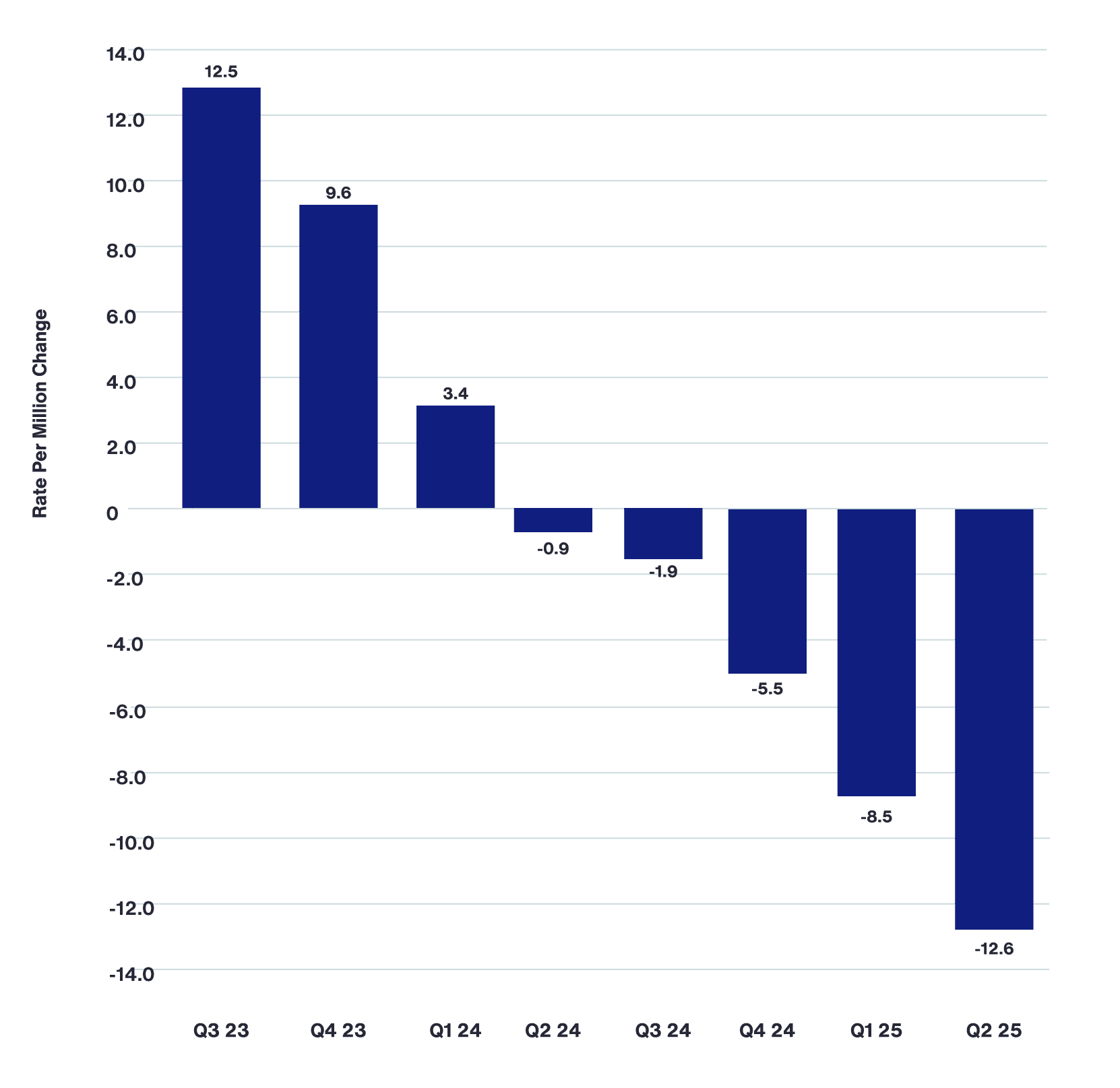
Snapshot of Declining U.S. Property Rates

28513 Property Program Article - Web chart

Source: Aon Q3 2025 U.S. Property Market Dynamics Report

Building Value: Taking a Risk Capital Approach

A risk capital strategy blends traditional risk transfer with alternatives like reinsurance, structured solutions, parametric, captives and insurance-linked securities. These alternative risk transfer methods give companies direct access to capital, enabling cost savings and tailored risk management that balances risk transfer, retention and alternative solutions.

As alternative capital sources expand, they drive more efficient risk management solutions by moving closer to the underlying risks.

“Traditional forms of risk transfer can no longer solely address the wide variety of risks across an organization. Alternative risk transfer solutions address exposures that were previously retained and also unlock capital,” adds Barber.

Innovative Risk Solutions Unlock Capital Efficiency

The current buyer-friendly market provides businesses with an opportunity to view risk management as a strategic asset that enhances business value. Accrued cost savings can lead to an enhanced corporate risk strategy that drives multidimensional growth.

The use of alternative, non-traditional risk transfer methods is one way to manage volatility and unlock access to strategic sources of capital.

Quote icon

If you are trying to use non-traditional solutions to enhance your portfolio, the soft market is a perfect time to do that. Traditional underwriters are much more flexible and willing to allow changes to the portfolio. It’s a great opportunity to experiment.

Toby Owen
Executive Director, International Property, Europe, Middle East, Africa and Asia

With alternative risk transfer methods — including the four listed below — businesses can directly access capital that’s tailored to their risk appetite.

  1. Parametric Risk Transfer: This provides organizations with a different way to strategically think about risk mitigation. This is especially true in catastrophe-prone areas where capacity and terms are restricted, deductibles are high and rates are adverse. Parametric offers payouts based on predetermined parameters (like specific weather measurements), rather than actual losses or claims. It also simplifies claims processing and enables rapid access to funds, resulting in quicker recovery for policyholders.
  2. Captives: While captives can be used as a cost-saving mechanism, they can also serve as a structure to retain risk and access other forms of capital to help optimize risk management and improve capital efficiency.
  3. Facultative Reinsurance: Demand for this is growing, which reflects the need to manage increasing volatility in a complex risk environment. Strategic use of facultative, often through a captive, helps businesses manage high-risk and complex exposures and enhances solvency by transferring select risks.
  4. Structured Solutions: These serve as a hybrid of other techniques, bringing together elements of risk retention, including captives and risk transfer, often via multi-year, loss-sensitive risk transfer approaches. They help businesses reallocate risk capital to where it is most needed, using it to address catastrophic severity risk or as a strategy to fund high-frequency exposures. They also help organizations access risk transfer more strategically by removing themselves from year-to-year insurance pricing volatility.

“If you’re not making changes in the soft market, you are exposing your program to volatility if the market goes the other way,” says Michael Gruetzmacher, Head of Alternative Risk Transfer in North America at Aon. “So now is the time to think about taking a portion of your shared and layered program and making it a multi-year program.”

Maximizing Value: 4 Actions to Build Program Efficiency

  • 02

    Put Data to Work

    Focus on use of quantitative analytics to develop and implement proactive and long-term market and risk strategies to build resilience against future uncertainties.

  • 03

    Reinvest Premium Savings

    Use the current buyer’s market to reinvest premium savings into underinsured risks and resilience-building measures. Prioritize investments in areas that address your business’ specific risk exposures and long-term goals.

  • 04

    Involve the Right Broker

    Talk to a risk advisor who uses risk analytics and modeling to help build a strategy that not only manages property risk but also builds long-term resilience.

Ready to Build Risk Resilience?

Talk to our team about how to use a strong risk capital strategy to gain access to capital and build long-term resilience in your property portfolio. Our team brings the experience and property risk perspective to help you turn today’s soft market into tomorrow’s competitive advantage.

Aon’s Thought Leaders
  • Ryan Barber
    Global Head of Property
  • Michael Gruetzmacher
    Head of Alternative Risk Transfer and Innovation, North America
  • Toby Owen
    Executive Director, International Property, Europe, Middle East, Africa and Asia

General Disclaimer

This document is not intended to address any specific situation or to provide legal, regulatory, financial, or other advice. While care has been taken in the production of this document, Aon does not warrant, represent or guarantee the accuracy, adequacy, completeness or fitness for any purpose of the document or any part of it and can accept no liability for any loss incurred in any way by any person who may rely on it. Any recipient shall be responsible for the use to which it puts this document. This document has been compiled using information available to us up to its date of publication and is subject to any qualifications made in the document.

Terms of Use

The contents herein may not be reproduced, reused, reprinted or redistributed without the expressed written consent of Aon, unless otherwise authorized by Aon. To use information contained herein, please write to our team.

More Like This

View All
Subscribe CTA Banner