Read Next Section

Impact Report 2025
Aon has long helped communities, organizations and countries protect themselves against new and emerging risks. Today , accelerating climate, geopolitical and economic volatility is increasing complexity across global systems — exposing a protection gap that leaves more than half the world uninsured, with the greatest impact felt by vulnerable communities and global growth.
At Aon we believe that no risk is uninsurable and are committed to making sure that resilience is accessible. By harnessing advanced data and analytics and financial engineering, Aon has changed a reactive approach into a proactive engine and, in the process, set new standards for speed, transparency and equity.
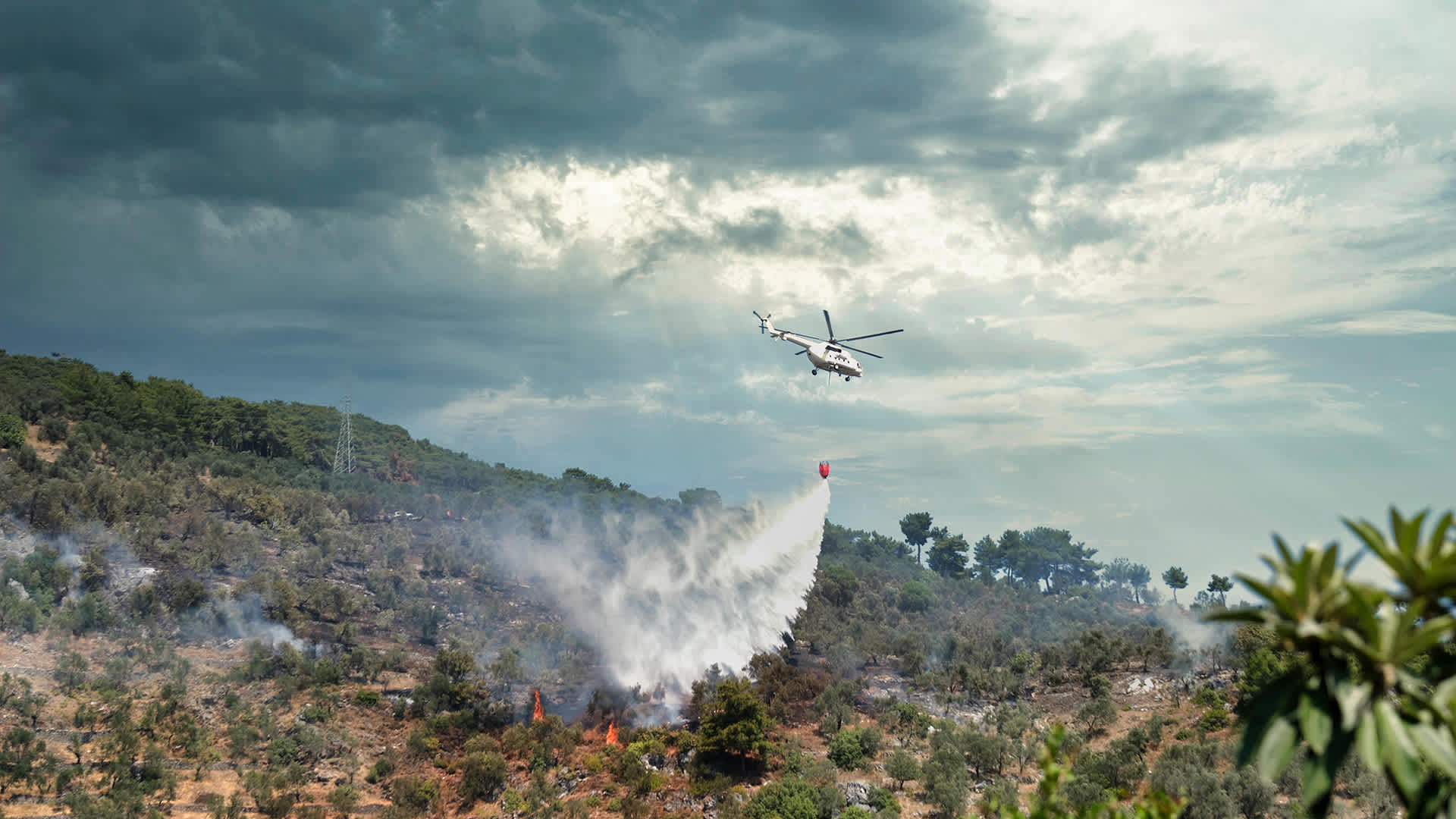
By serving as a bridge between humanitarian organizations, capital providers and insurers, Aon has sparked cross-sector collaboration and systemic change. Our innovative use of not only traditional products, but also parametric insurance and catastrophe bonds — once exclusive to private markets — now gives vulnerable populations the opportunity to better assess their risks and access new forms of capital.
Our solutions help governments and organizations maintain core services and advance humanitarian missions, in the face of climate, geopolitical and economic volatility. By blending public and private capital, Aon has created new market opportunities that go beyond traditional philanthropy.
Impact Report 2025
The global coffee industry is quickly becoming a prime example of how climate risk translates into business risk. The world’s main coffee-producing countries — Brazil, Colombia and Vietnam — are facing more frequent and severe droughts, directly threatening yields, quality and the reliability of supply.
Aon’s climate analytics show that in the next 25 years , half the world’s coffee supply could be threatened by drought — roughly double the current share.
Despite these large and growing losses, the vast majority of coffee crops lost to drought are uninsured, leaving producers and buyers exposed and destabilising long-term supply relationships.
In Colombia, there is an added complication in that smallholder farmers — who make up the majority of the country’s coffee supply — are on average 58 years old. Severe climate events can push these producers out of the supply chain entirely, with no younger generation to take over.
In 2025, Aon spotted an opportunity to close this protection gap between the insured and uninsured and improve the resilience for farmers facing climate risk. Working with a global coffee chain, the Colombian government and a local coffee trader, Aon constructed an insurance program for farmers in the Narino region.
This parametric insurance program addresses two main climate risks for the farmers: excessive rainfall during the harvest and drought during the flowering — both of which are increasing in frequency and severity due to climate change.
The program encourages the farmers to remain in business during adverse weather events, thereby maintaining supply chain stability for the global coffee chain and improving community resilience for the farmers.
“As climate change continues to challenge the food and drink industry, the need for innovative risk management strategies is clear,” said Dominic Probyn, Aon’s director for climate risk advisory and architect of the Colombia parametric insurance. “Insurers can help close the protection gap in food supply chains — demand and risk capital are there to address the challenge.”
When natural catastrophes strike, communities, businesses and governments can often face months of waiting for financial support to rebuild — if it comes at all.
Jamaica is the world’s third-most exposed country to natural disasters positioned in the Atlantic Hurricane Belt with over 80% of its population living in low-lying coastal zones in a region where up to three-quarters of disaster losses go uninsured.. In the past, hurricanes imposed severe strain on the country, wiping out entire sections of the economy and eating up limited public budgets.
Working with the Jamaican government and The World Bank, Aon built a $150 million catastrophe bond — the first ever sponsored by a Caribbean government and small island — to help the island recover quickly should disaster strike. Using clear, pre-agreed triggers like storm strength and location, funds were designed to flow within weeks, not months.
In October 2025, Hurricane Melissa made landfall in Jamaica causing $8.8 billion in damage, the equivalent of 41% of Jamaica’s GDP, making it the costliest storm in the island’s history. When the storm struck, the bond provided a near immediate payout of $150 million, enabling Jamaica to fund emergency response, restore infrastructure and protect social programs.
As well as providing much needed funds, Jamaica used the catastrophe bond to signal its fiscal responsibility and strengthen its credibility with global partners. In fact, since the hurricane, Jamaica has secured $6.7 billion for three years in further international funding, proving that innovative risk management attracts investment.
Jamaica’s catastrophe bond is a breakthrough in sovereign disaster risk financing. While catastrophe bonds already exist, the majority have been used by large nations and global insurers. Aon broke through that barrier by structuring a transaction that enables a small island state to tap global capital markets.
The Jamaican bond’s reserves have also driven long-term impact through The World Bank’s International Bank for Reconstruction and Development, where funds awaiting deployment are used to finance education, infrastructure and social development projects. This dual-purpose approach transforms disaster financing into a proactive tool for equity and climate adaptation.
Around the world, linear infrastructure systems like roads, water and sanitary networks are typically underinsured and, in certain countries, entirely uninsured.
So, when a natural catastrophe strikes, not only is there a substantial protection gap between insured and economic losses, but it is also usually the government which bears the financial and logistical responsibility to bring everything back online.
Aon is working with local governments around the world to ensure that key infrastructure is insurable and resilient. And Aon has been using data and analytics to identify future hazards and accurately price the risks.
This project has its roots in the devastating 6.3-magnitude earthquake in Christchurch, New Zealand, in 2011, which killed 185 people, disrupted tens of thousands of lives and destroyed 80% of the city centre.
As part of the years-long reconstruction process following the quake, local government across New Zealand soon realised that to properly protect the city and its linear infrastructure, a new integrated approach to risk engineering and insurance would be needed — one that would understand true value of these assets, their vulnerability, opportunities for resilience retrofits and back it up with optimised risk transfer.
Using engineering expertise and catastrophe modelling, Aon improved the understanding of the risk, identified vulnerability hotspots in operations of these linear infrastructure systems — along with the steps needed to reduce the risk to make local council systems either insurable or make risk transfer more economic.
Armed with this information, and working with the London insurance markets, Aon and the New Zealand local government successfully created an insurance program for previously uninsured linear infrastructure assets. Since 2012, Aon and New Zealand have worked to keep the program at a constant, manageable level by highlighting risk improvements and resilience retrofits and providing better data to the insurance markets.
Partnering with environmental and engineering firm Tonkin + Taylor, the technology and modelling Aon first used in New Zealand now helps local councils around the world understand their vulnerabilities to future disasters and find the most effective mitigation and adaptation actions to increase their resilience.
When floods, droughts or cyclones hit, the difference between resilience and devastation often comes down to timing. For millions of people living on the frontlines of climate risk, access to early funding can mean crops protected instead of lost, families kept together instead of displaced, and communities secured before a crisis escalates.
Together with the Start Network, Aon is helping ensure that life‑saving support reaches communities before disasters unfold—not after the damage is done.
Since 2023, Aon has partnered with the Start Network to strengthen Start Ready, a global anticipatory action fund that enables local organizations to act ahead of predictable climate shocks. By working with Aon’s capital tool Remetrica and applying Aon’s risk expertise to build insurance capacity, the collaboration adds a critical view of the organizations risk and builds layer of financial protection to the fund—ensuring it can withstand years of heightened climate volatility and continue delivering early support at scale.
This work reflects Aon’s commitment to redefining resilience: using risk insight and innovative capital solutions to expand protection for the communities that need it most.
“We are proud to work with the Start Network,” said Emma Karhan, head of public private partnerships at Aon. “This initiative underscores our dedication to fostering resilience and providing innovative solutions for humanitarian efforts.”
“Thanks to this insurance layer, Start Ready funds can be stretched even further — enabling more people to be protected and more resources to be disbursed ahead of specific climate events,” said Anna Farina, head of crisis anticipation and risk finance at the Start Network. “This is a significant step forward in scaling anticipatory action and building greater resilience where it's needed most.”
When disasters strike without warning, the speed at which help arrives can determine whether families find shelter, access clean water, or receive lifesaving medical care.
For communities facing smaller‑scale or under‑reported crises, delays in funding can mean being overlooked entirely. The International Federation of Red Cross and Red Crescent Societies (IFRC) exists to close that gap — delivering immediate support to communities in crisis, wherever and whenever emergencies occur.
Previously, IFRC’s Disaster Response Emergency Fund (DREF) could run dry before year’s end, prompting them to work with Aon and reinsurers to secure a groundbreaking indemnity insurance policy — the first of it’s kind for the humanitarian sector. The policy protects DREF from volatility and increases its capacity to effectively distribute funds to those in need.
In 2024, demands for disaster relief surpassed the DREF’s threshold, but this time the shortfall triggered the policy’s first-ever insurance payout. Aon secured 15.5 million Swiss francs (approximately $17 million) in insurance payouts, enabling the swift delivery of critical humanitarian aid to an additional one million people across countries grappling with disaster.
As part of the program, Aon managed the claims process through a tightly coordinated operational framework, ensuring funds reached the Red Cross within seven business days — even across sanctioned countries where humanitarian exemptions are in place. It was one of the strongest representations that the industry could collaborate effectively and efficiently to deliver for those that need it most.
This funding has supported urgent relief efforts across Mali, Sierra Leone, Nepal, Vietnam, Nigeria, Niger, South Sudan, Bolivia, Lao PDR and Bosnia and Herzegovina, ensuring timely assistance reached communities when they needed it most.
This product has been renewed for another three years, establishing its purpose within the organisation as a key lever for managing risks within the DREF.
Since the 2022 Russian invasion in Ukraine, western insurers have largely stepped back from insuring business in the country, making it harder for businesses to operate in Ukraine.
As the largest global broker operating in Ukraine, Aon is committed to supporting the country’s economic recovery. Guided by our team on the ground and contacts around the world, Aon is putting our expertise, analytics and relationships towards urgent work that will unlock innovative solutions to this complex challenge.
In June 2024, Aon launched a $350 million insurance program with the U.S. International Development Finance Corporation (DFC) to build insurance capacity and accelerate new capital investment to fuel economic recovery in Ukraine.
The program consisted of a comprehensive $50 million reinsurance facility — developed by Aon, the DFC and the Ukraine Ministry for Development of Economy and Trade — and an additional $300 million in war risk insurance designed for Ukraine's healthcare and agriculture industries.
Beyond the initial program, in December 2024, Aon launched a €110 million ($115 million) insurance facility in collaboration with the European Bank for Reconstruction and Development to provide reinsurance capacity for international reinsurers and Ukrainian insurance companies to cover war-related risks in Ukraine.
In 2025 Aon launched the EMEA Ukraine Early Careers Program with the aim of hiring displaced Ukrainians in Aon offices across Europe. As part of the program, 10 Ukrainian colleagues joined Aon in Poland, Hungary, Lithuania and Slovakia on an 18-month development journey focused on building their business skills and growing their professional networks.
The program prepares the future workforce for when these young professionals may return to Ukraine — with skills, experience and a strong path forward.

Our Better Being podcast series, hosted by Aon Chief Wellbeing Officer Rachel Fellowes, explores wellbeing strategies and resilience. This season we cover human sustainability, kindness in the workplace, how to measure wellbeing, managing grief and more.

Podcast 23 mins
Better Being Series: Understanding Burnout in the Workplace
Podcast 14 mins
Better Being Series: Why Nutrition Matters
Podcast 10 mins
Better Being Series: Discover the ‘Blue Zones’ Where People Live Longer
Podcast 20 mins
Better Being Series: Improving Your Financial Wellbeing
Podcast 17 mins
Better Being Series: Are You Taking Care of Your Digital Wellbeing?
Podcast 19 mins
On Aon Podcast: Better Being Series Dives into Women’s Health
Podcast 25 mins
On Aon’s Better Being Series: Managing Loss and GriefExpert Views on Today's Risk Capital and Human Capital Issues

Article 8 mins
Thriving in an Interconnected World: How the C-Suite Embraces Uncertainty
Article 6 mins
Powering Progress: Collaborating to Build a Sustainable Future in Emerging Markets
Article 5 mins
Building Business Resilience: Key Steps to Effectively Integrate Risk Management Across Your Organisation
Article 7 mins
Why Humans Are the Essential Factor in the Success of Artificial Intelligence (AI)
Article 5 mins
Leveraging Research and Expertise to Strengthen Your HR Strategy for 2025 and Beyond
Article 5 mins
Managing Risk on the Energy Transition Journey
Article 7 mins
The Role of Risk Management in the Age of Generative Artificial Intelligence
Article 7 mins
Finding A Way In Asia Pacific's New Economic Reality
Article 4 mins
Three Ways to Boost Value from Benefits: APAC Insights from LinkedInExpert Views on Today's Risk Capital and Human Capital Issues

Article 3 mins
Article Template to DuplicateExpert Views on Today's Risk Capital and Human Capital Issues

Article 2 mins
Introduction: Clarity and Confidence to Act Now
Article 11 mins
Navigating a New Age of Macroeconomic Uncertainty
Article 3 mins
Making Better Decisions — A C-Suite Perspective
Article 3 mins
Understanding the Dynamics of Today’s Workforce — Reward, Retain, Evolve
Article 3 mins
Artificial Intelligence — Managing the Risk and Potential
Article 10 mins
Unlocking Balance Sheet Value to Empower Your Business Strategy
Article 3 mins
Navigating the Unpredictable: Aon’s Suite of Actionable Analytics
Article 4 mins
Redefining Risk Capital as a Business Enabler: Veolia's Innovative Approach
Article 9 mins
A Data-Driven Approach to Better Workforce Decisions
Article 5 mins
The Importance of Pay Transparency
Article 6 mins
How Human Capital Data Enhances Risk Management for Financial Institutions
Article 4 mins
The Battle for Top Talent in the Professional Services Sector
Article 5 mins
Insights on a Volatile World — Risk Factors That Businesses Need to be MonitoringBetter Decisions Across Interconnected Risk and People Issues.

Article 3 mins
Acknowledging Our Complex Reality
Article 10 mins
Trade in a Technology-Driven Future
Article 9 mins
How AI and Workforce will Intersect: Navigating Risks and Opportunities
Article 8 mins
Weather and Workforce: Employers Must Quantify the Risk
Article 9 mins
Steering Trade and Supply Chains Amid Weather Challenges
Report 13 mins
Trade Issues Confront Global Businesses on Multiple Fronts
Report 19 mins
Technology is Driving Firms to Harness Opportunities and Defend Against Threats
Report 19 mins
Climate Analytics Unlock Capital to Protect People and Property
Report 14 mins
A Workforce in Transition Prepares to Meet a Host of ChallengesThe construction industry is under pressure from interconnected risks and notable macroeconomic developments. Learn how your organization can benefit from construction insurance and risk management.

Article 8 mins
How North American Construction Contractors Can Mitigate Emerging Risks
Article 7 mins
Managing Construction Risks: 7 Risk Advisory Steps
Article 7 mins
Unlocking Capacity and Capital in a Challenging Construction Risk Market
Article 7 mins
Protecting North American Contractors from Extreme Heat Risks with Parametric
Article 5 mins
How Climate Modeling Can Mitigate Risks and Improve Resilience in the Construction Industry
Report 1 mins
Construction Risk Management Europe Report 2023
Article 8 mins
Parametric Can Help Mitigate Extreme Heat Risks for Contractors in EMEAOur Cyber Resilience collection gives you access to Aon’s latest insights on the evolving landscape of cyber threats and risk mitigation measures. Reach out to our experts to discuss how to make the right decisions to strengthen your organization’s cyber resilience.

Article 8 mins
Cyber and E&O Market Conditions Remain Favorable Amid Emerging Global Risks
Article 7 mins
How to Navigate AI-Driven Cyber Risks
Article 9 mins
Building Resilience in a Buyer-Friendly Cyber and E&O Market
Article 11 mins
A Middle Market Roadmap for Cyber Resilience
Article 7 mins
Lessons Learned from the CrowdStrike Outage: 5 Strategies to Build Cyber Resilience
Article 8 mins
Responding to Cyber Attacks: How Directors and Officers and Cyber Policies Differ
Article 6 mins
Why Now is the Right Time to Customize Cyber and E&O ContractsOur Employee Wellbeing collection gives you access to the latest insights from Aon's human capital team. You can also reach out to the team at any time for assistance with your employee wellbeing needs.

Article 8 mins
Employer Strategies for Cancer Prevention and Treatment
Article 6 mins
The Long-Term Care Conundrum in the United States
Article 9 mins
Developing a Paid Leave Strategy That Supports Workers and Their Families
Article 9 mins
4 Ways to Foster a Thriving Workforce Amid Rising Health Costs
Article 9 mins
The Next Evolution of Wellbeing is About Performance
Article 6 mins
Three Ways Collective Retirement Plans Support HR Priorities
Article 9 mins
How the Right Employee Wellbeing Strategy Impacts Microstress and Burnout at Work
Podcast 13 mins
On Aon Podcast: The Future of Healthcare: Key Factors Impacting Medical Trend Rates
Article 7 mins
Making Wellbeing Part of a Company’s DNA
Article 7 mins
A Comprehensive Approach to Financial WellbeingExplore Aon's latest environmental social and governance (ESG) insights.
Our Global Insurance Market Insights highlight insurance market trends across pricing, capacity, underwriting, limits, deductibles and coverages.

Article 12 mins
Q4 2023: Global Insurance Market Overview
Article 13 mins
Top Risk Trends to Watch in 2024Better Decisions Across Interconnected Risk and People Issues.

Report 28 mins
A New Era of Converging Risks and Accelerating Disruption
Article 1 mins
Top 10 Global Risks
Article 1 mins
Industry Insights
Article 1 mins
Regional Results
Article 41 mins
Country-Level Findings
Report 5 mins
Methodology and Respondent DemographicsHow do the top risks on business leaders’ minds differ by region and how can these risks be mitigated? Explore the regional results to learn more.

Article 12 mins
Rethinking Resilience: Addressing Asia Pacific’s Top Risks
Article 10 mins
Turning Uncertainty into Opportunity: Managing Risk in the EMEA Region
Article 10 mins
Latin America’s Risk Landscape: Turning Complexity into Competitive Advantage
Article 10 mins
Rethinking Resilience: Navigating North America’s Evolving Risk LandscapeExplore Aon's corporate sustainability impact and strategy.

Article 8 mins
Executive Summary
Article 13 mins
Aon’s Environmental Sustainability
Article 15 mins
Supporting Energy Resilience and Transition to Low-Carbon Economy
Article 23 mins
Our Commitment to Our Colleagues
Article 8 mins
Our Community Impact
Article 10 mins
Governance
Article 8 mins
Cyber and Data Security
Article 11 mins
Redefining ResilienceTrade, technology, weather and workforce stability are the central forces in today’s risk landscape.

Article 6 mins
Cyber Risk: Turning Uncertainty into Opportunity
Article 7 mins
Business Interruption: Managing Risk in an Interconnected World
Article 6 mins
Why Economic Slowdown is an Ongoing Risk for Organizations
Article 8 mins
Navigating Regulatory and Legislative Change
Article 5 mins
Increasing Competition Is Intensifying Risk for Organizations
Article 7 mins
Commodity Price Risk and Material Scarcity: An Escalating and Complex Risk
Article 9 mins
Supply Chain or Distribution Failure: Navigating the New Normal
Article 5 mins
Damage to Reputation or Brand: A Critical Risk
Article 6 mins
Geopolitical Volatility: Preparing for the Unpredictable
Article 6 mins
Cash Flow and Liquidity Risk: A Rising ChallengeThese industry-specific articles explore the top risks, their underlying drivers and the actions leaders are taking to build resilience.

Article 9 mins
Building Resilience to Support Growth in Construction and Real Estate
Article 10 mins
Managing Risk and Unlocking Opportunity in the Food, Agribusiness and Beverage Industry
Article 8 mins
Adapting to Disruption: How Financial Institutions are Reframing Risk
Article 10 mins
Turning Risk into Resilience in the Industrials and Manufacturing Industry
Article 11 mins
Navigating Risk in Insurance: Turning Complexity into Competitive Advantage
Article 10 mins
Navigating Risk in Life Sciences: Building Resilience to Support Growth
Article 11 mins
Navigating Volatility in Natural Resources: Risk Management as a Value Driver
Article 10 mins
Navigating Risk in Transportation and Logistics: Gearing Up for Big Transitions
Article 9 mins
Technology, Media and Communications: Rethinking Risk in a Shifting LandscapeOur Human Capital Analytics collection gives you access to the latest insights from Aon's human capital team. Contact us to learn how Aon’s analytics capabilities helps organizations make better workforce decisions.

Article 35 mins
5 Human Resources Trends to Watch in 2025
Article 13 mins
Medical Rate Trends and Mitigation Strategies Across the Globe
Article 9 mins
3 Strategies to Help Avoid Workers Compensation Claims Litigation
Podcast 15 mins
On Aon Podcast: Using Data and Analytics to Improve Health Outcomes
Article 14 mins
How Technology Will Transform Employee Benefits in the Next Five Years
Podcast 18 mins
On Aon Podcast: Technology Impacting the Future of Health and Benefits
Article 11 mins
Designing Tomorrow: Personalizing EVP, Benefits and Total RewardsRead our collection of human capital articles that explore in depth hot topics for HR and risk professionals, including using data and analytics to measure total rewards programs, how HR and finance can better partner and the impact AI will have on the workforce.

Article 12 mins
Total Rewards Strategies That Drive Business Outcomes
Article 35 mins
5 Human Resources Trends to Watch in 2025
Article 20 mins
5 Ways HR Can Partner with Finance to Drive Growth
Article 15 mins
How Artificial Intelligence is Transforming Human Resources and the Workforce
Article 15 mins
Five Big Human Resources Trends to Watch in 2024
Article 11 mins
Designing Tomorrow: Personalizing EVP, Benefits and Total Rewards
Article 10 mins
How Data and Analytics Can Optimize HR Programs
Article 15 mins
Get Ready for the Top 5 HR Trends in 2023Explore our hand-picked insights for human resources professionals.

Article 7 mins
COVID-19 has Permanently Changed the Way We Think About Wellbeing
Article 10 mins
How Data and Analytics Can Optimize HR Programs
Article 7 mins
Case Study: The LPGA Unlocks Talent Potential with Data
Article 10 mins
Navigating the New EU Directive on Pay Transparency
Article 7 mins
Rethinking Your Total Rewards Programs During Mergers and AcquisitionsOur Workforce Collection provides access to the latest insights from Aon’s Human Capital team on topics ranging from health and benefits, retirement and talent practices. You can reach out to our team at any time to learn how we can help address emerging workforce challenges.
Article 8 mins
Weather and Workforce: Employers Must Quantify the Risk
Article 12 mins
Total Rewards Strategies That Drive Business Outcomes
Article 8 mins
AI and Workforce Skills: Who Should Act and Why Now?
Article 19 mins
3 Strategies to Promote an Inclusive Environment and Bridge the Gender Gap
Article 8 mins
2025 Salary Increase Planning Tips
Article 12 mins
People Risks Are Rising: Here’s How U.S. Benefits Are Stepping Up
Article 8 mins
Employer Strategies for Cancer Prevention and Treatment
Article 6 mins
Taking a Data-Led Approach to Job Architecture to Accelerate Pay Transparency
Podcast 12 mins
Better Being Series: Building Sustainable Performance in a Multi-Generational Workforce
Article 7 mins
Key Trends in U.S. Benefits for 2025 and Beyond
Article 7 mins
Why Pay Transparency Demands a Total Rewards Lens
Article 9 mins
4 Ways to Foster a Thriving Workforce Amid Rising Health CostsOur Mergers and Acquisitions (M&A) collection gives you access to the latest insights from Aon's thought leaders to help dealmakers make better decisions. Explore our latest insights and reach out to the team at any time for assistance with transaction challenges and opportunities.
Article 7 mins
Rethinking Your Total Rewards Programs During Mergers and Acquisitions
Article 9 mins
Organizational Design and Talent Planning are Key to M&A Success
Article 5 mins
Project Management for HR: The Secret Behind a Successful M&A Deal
Article 8 mins
Cultural Alignment Planning Drives M&A Success
Report 1 mins
A Guide to Maximizing Value in Post-Merger Integrations
Report 2 mins
The ABC's of Private Equity M&A: Deal Flow Impacts of Al, Big Tech and Climate Change
Article 11 mins
The Silver Lining on M&A Deal Clouds: M&A Insurance Insights from 2023The challenges in adopting renewable energy are changing with technological advancements, increasing market competition and numerous financial support mechanisms. Learn how your organization can benefit from our renewables solutions.

Article 4 mins
5 Steps for Successful Carbon Accounting Verification
Article 6 mins
AI Innovations in Renewable Energy: Transforming the Sector
Article 11 mins
Securing Human Capital in Natural Resources
Article 6 mins
Decarbonizing Construction for a Low-Emission FutureHow do businesses navigate their way through new forms of volatility and make decisions that protect and grow their organizations?
Our Parametric Insurance Collection provides ways your organization can benefit from this simple, straightforward and fast-paying risk transfer solution. Reach out to learn how we can help you make better decisions to manage your catastrophe exposures and near-term volatility.

Article 10 mins
How Public Entities and Businesses Can Use Parametric for Emergency Funding
Article 6 mins
Parametric Insurance: A Complement to Traditional Property Coverage
Article 8 mins
Using Parametric Insurance to Match Capital to Climate Risk
Article 6 mins
Using Parametric Insurance to Close the Earthquake Protection Gap
Article 5 mins
How Technology Enhancements are Boosting ParametricOur Pay Transparency and Equity collection gives you access to the latest insights from Aon's human capital team on topics ranging from pay equity to diversity, equity and inclusion. Contact us to learn how we can help your organization address these issues.
Article 6 mins
Taking a Data-Led Approach to Job Architecture to Accelerate Pay Transparency
Article 19 mins
3 Strategies to Promote an Inclusive Environment and Bridge the Gender Gap
Report 1 mins
The 2024 North America Pay Transparency Readiness Study
Article 10 mins
How Financial Institutions can Prepare for Pay Transparency Legislation
Article 8 mins
Pay Transparency Can Lead to Better Equity Across Benefits
Article 12 mins
Understanding and Preparing for the Rise in Pay Transparency
Podcast 14 mins
On Aon Podcast: Understanding Pay Transparency Regulations
Article 10 mins
Navigating the New EU Directive on Pay Transparency
Article 6 mins
To Disclose Pay or Not? How Companies are Approaching the Pay Transparency Movement
Podcast 19 mins
On Aon Podcast: Better Being Series Dives into Women’s Health
Article 11 mins
Advancing Women’s Health and Equity Through Benefits and SupportForecasters are predicting an extremely active 2024 Atlantic hurricane season. Take measures to build resilience to mitigate risk for hurricane-prone properties.
Article 8 mins
Florida Hurricanes Not Expected to Adversely Affect Property Market
Article 10 mins
Build Resilience for an Extremely Active Atlantic Hurricane Season
Article 4 mins
Four Steps to Develop Strong Property Risk Coverage in a Hardening Market
Podcast 16 mins
On Aon Podcast: Navigating and Preparing for Catastrophes
Article 6 mins
Parametric Insurance: A Complement to Traditional Property Coverage
Article 4 mins
Navigating Climate Risk Using Multiple Models and Data Sets
Article 5 mins
Rising Losses From Severe Convection Storms Mostly Explained by Exposure Growth
Article 6 mins
Using Parametric Insurance to Close the Earthquake Protection GapOur Technology Collection provides access to the latest insights from Aon's thought leaders on navigating the evolving risks and opportunities of technology. Reach out to the team to learn how we can help you use technology to make better decisions for the future.
Article 9 mins
How AI and Workforce will Intersect: Navigating Risks and Opportunities
Article 23 mins
The AI Data Center Boom: Strategies for Sustainable Growth and Risk Management
Article 8 mins
AI and Workforce Skills: Who Should Act and Why Now?
Article 7 mins
How Technology is Transforming Open Enrollment in the U.S.
Article 15 mins
Navigating Cyber Risks in EMEA: Key Insights for 2025
Article 7 mins
How to Navigate AI-Driven Cyber Risks
Article 15 mins
How Artificial Intelligence is Transforming Human Resources and the Workforce
Podcast 9 mins
On Aon Podcast: How has CrowdStrike Changed the Cyber Market?
Article 12 mins
5 Ways Artificial Intelligence can Boost Claims Management
Article 12 mins
Navigating AI-Related Risks: A Guide for Directors and Officers
Article 5 mins
How Technology Enhancements are Boosting Parametric
Article 7 mins
How to Futureproof Data and Analytics Capabilities for ReinsurersOur Trade Collection gives you access to the latest insights from Aon's thought leaders on navigating the evolving risks and opportunities for international business. Reach out to our team to understand how to make better decisions around macro trends and why they matter to businesses.
Article 10 mins
Trade in a Technology-Driven Future
Podcast 9 mins
Special Edition: Global Trade and its Impact on Supply Chain
Article 8 mins
The Evolving Threat of Cargo Theft: 5 Key Mitigation Strategies
Report 1 mins
Findings from Aon's Global Risk Management Survey | Tenth Edition
Article 4 mins
Four Steps to Develop Strong Property Risk Coverage in a Hardening Market
Article 14 mins
Cutting Supply Chains: How to Achieve More Reward with Less Risk
Article 9 mins
Driving Private Equity Value Creation Through Credit Solutions
Article 7 mins
4 Steps to Help Take Advantage of a Buyer-Friendly Directors' & Officers' Market
Article 9 mins
Managing Reputational Risks in Global Supply Chains
Article 8 mins
How an Outsourced Chief Investment Officer Can Help Improve Governance and Manage Complexity
Article 8 mins
Decarbonizing Your Business: Finding the Right Insurance and Strategy
Article 8 mins
Reputation Analytics as a Leading Indicator of ESG RiskBetter Decisions Across Interconnected Risk and People Issues.

Report 5 mins
Chapter 1: Author’s Note & Executive Summary
Report 8 mins
Chapter 2: North America: Highlights, Claims Severity and Frequency
Report 3 mins
Chapter 3: North America: Breach Type and Notification
Report 24 mins
Chapter 4: North America: Industry Sectors and Trends
Report 5 mins
Chapter 5: North America: Tax Insurance Claims
Report 5 mins
Chapter 6: EMEA: Highlights and Introduction
Report 9 mins
Chapter 7: EMEA: Claim Frequency and Metrics
Report 7 mins
Chapter 8: EMEA: Notifications by Target Location and Claims Severity and Payment Trends
Report 10 mins
Chapter 9: EMEA: Breach Types and Trends
Report 7 mins
Chapter 10: EMEA: Case Law, Insurer Survey, Claims Handling and Tax
Report 6 mins
Chapter 11: APAC: Asia
Report 9 mins
Chapter 12: APAC: PacificWith a changing climate, organizations in all sectors will need to protect their people and physical assets, reduce their carbon footprint, and invest in new solutions to thrive. Our Weather Collection provides you with critical insights to be prepared.
Article 9 mins
Steering Trade and Supply Chains Amid Weather Challenges
Podcast 9 mins
On Aon Podcast: Climate Impact on the Property and Casualty Market
Alert 14 mins
L.A. Wildfires Highlight Urgent Need for Employee Support and Business Resilience
Report 3 mins
2026 Climate and Catastrophe Insight
Article 10 mins
How Public Entities and Businesses Can Use Parametric for Emergency Funding
Podcast 12 mins
On Aon Podcast: Tackling Climate Risk to Build Economic Resilience
Article 8 mins
Understanding Freeze Risk in a Changing Climate
Podcast 9 mins
On Aon Podcast: Climate Science Through Academic Collaboration
Article 6 mins
How Companies Are Using Climate Modeling to Improve Risk Decisions
Article 8 mins
Using Parametric Insurance to Match Capital to Climate Risk
Article 9 mins
Record Heatwaves: Protecting Employee Health and SafetyOur Workforce Resilience collection gives you access to the latest insights from Aon's Human Capital team. You can reach out to the team at any time for questions about how we can assess gaps and help build a more resilience workforce.
You will soon receive an email to verify your email address. Please click on the link included in this note to complete the subscription process, which also includes providing consent in applicable locations and an opportunity to manage your email preferences.
Article 10 Min Read
Your request is being reviewed so we can align you to the best resources on our team. In the meantime, we invite you to explore some of our latest insights below.
Article 10 Min Read

