Captives and Cyber: From Tactical Response to Strategic Risk Optimization

Captives and Cyber: From Tactical Response to Strategic Risk Optimization
November 4, 2025 7 mins

Captives and Cyber: From Tactical Response to Strategic Risk Optimization

Captives are a core, strategic tool for managing cyber risk, helping organizations drive efficiency, manage volatility and build resilience in a rapidly evolving risk environment.

Captives are moving from a reactive stopgap to a core, strategic tool for managing cyber risk — helping organizations drive efficiency, manage volatility and build resilience in a rapidly evolving risk environment.

Key Takeaways
  1. Nearly a quarter of respondents to Aon’s 2025 Global Risk Management Survey underwrite cyber risk through their captives, up from just 1% in 2014.
  2. Organizations are increasingly using captives proactively to manage volatility and optimize the total cost of risk.
  3. Four core use cases for cyber captives are emerging: deductible infill, program gap infill, no insurance/incubation and portfolio or alternative risk transfer strategies.

The use of captives continues to expand as organizations seek more control and flexibility in financing risk. According to Aon’s 2025 Global Risk Management Survey, 22% of respondents currently have a captive or protected cell company, while a further 4.1% are planning to establish one within the next three years. In total, 26.1% of respondents either have a captive or are planning to set one up — evidence of sustained momentum.1

Growth in cyber underwriting through captives is even more pronounced. Nearly a quarter (24%) of respondents with captives now underwrite cyber risk through these vehicles, up sharply from just 1% in 2014. While this represents a slight decrease from 27% in 2023,2 it underscores the shift from niche use to a mainstream risk financing lever. More broadly, the global cyber insurance market is also expected to continue its upward trajectory, with total market size projected to reach $16.3 billion in 2025, up from $15.3 billion in 2024.3

Drivers of Captive Growth and Market Stabilization 

A combination of market dynamics and organizational capabilities is propelling captive adoption. Historically, challenging conditions in the insurance market drove companies toward alternatives like captives. For cyber specifically, recent softening has made traditional placements more accessible in the near term — but that’s only part of the picture. 

Advances in data, modeling and analytics are enabling sharper insight into cyber exposure, increasing confidence to retain risk through captives and other innovative structures. Captives are also providing a route to reinsurance markets — where underwriting can be more flexible — and, in some regions, regulatory shifts have simplified set-up and operation. 

The recent stabilization — or slight decline — in captive usage since 2023 should not be read as a reversal. Rather, it may reflect a temporary period of increased competition and capacity in cyber. 

58%

Among captives managed by Aon, premiums for cyber coverage grew by 58% between 2022 and 2023.

As conditions evolve, we expect deliberate, longer-term captive participation to grow — supporting program adaptability, capital efficiency and enterprise preparedness over time.

A Strategic Shift in Captive Utilization 

Captives are no longer just a tactical response to high-frequency, low-severity losses or a fallback when traditional options are limited. They are increasingly integrated as a central element of a forward-looking, company-led approach to cyber risk financing. 

Organizations are considering volatility management across the enterprise, not just in silos, which aligns with the way captives are being used to support resilience across the entire insurable risk profile. Improvements in analytics, richer internal and external data and more sophisticated modeling are enabling risk leaders to take a comprehensive view of exposures — and to use captives as a purpose-driven lever for flexibility and value. 

Understanding Cyber Captive Utilization  

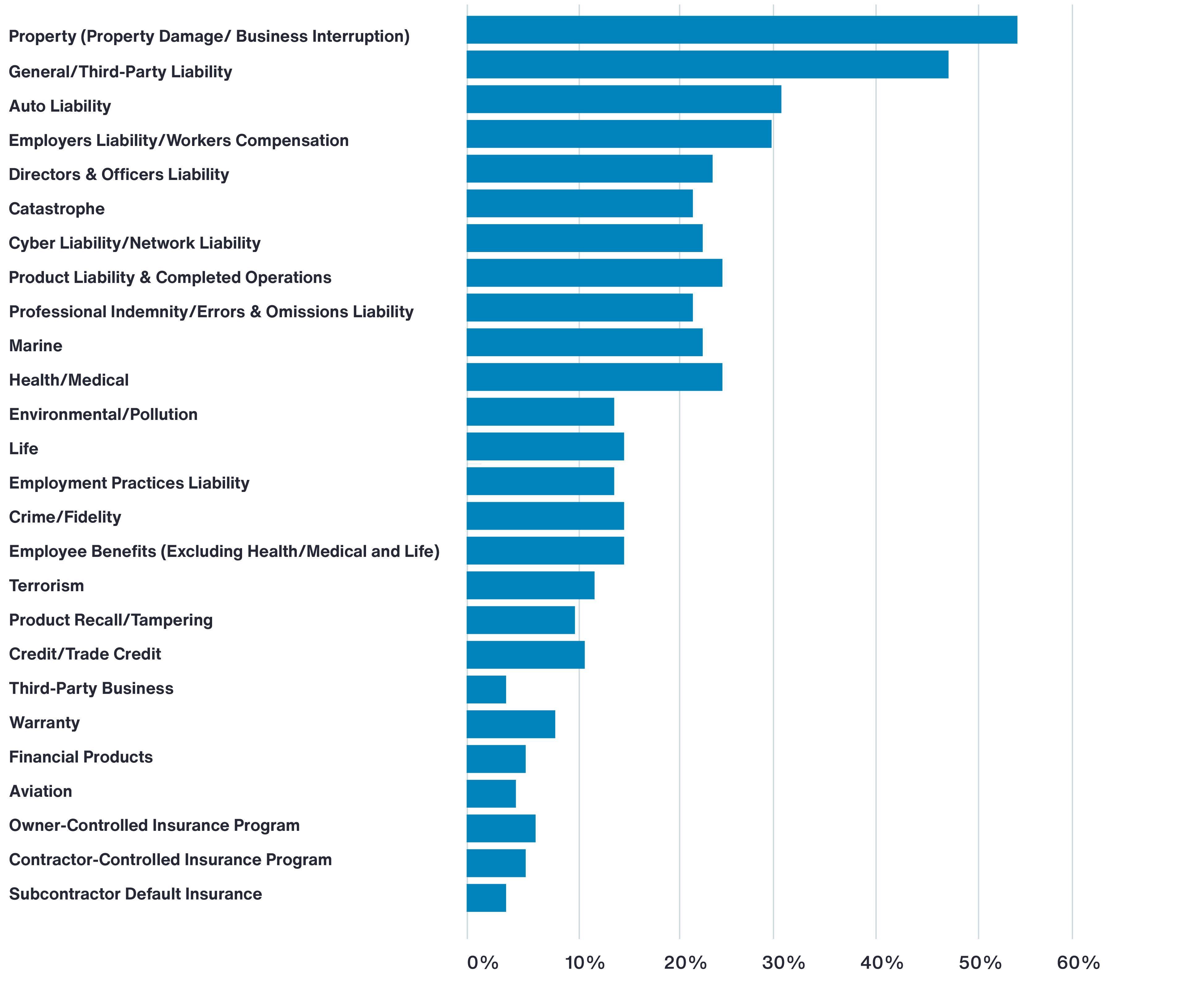
Cyber risks are now among the top 10 most common risks underwritten by captives, reflecting a rapid rise in adoption over recent years.  

Top cyber risks

Source: Aon's 2025 Global Risk Management Survey

How Organizations Use Captives for Cyber Risk 

Organizations are deploying captives in cyber risk management through four primary ways to create a more adaptable and cost-effective approach to cyber risk financing:

  1. Deductible Infill: Captives are used to increase the attachment point of the primary market, allowing organizations to retain and manage lower value incidents internally. This approach can help optimize risk transfer and provide greater flexibility in structuring insurance programs.
  2. Program Gap Infill: Where there are gaps in insurance capacity or appetite — particularly in specific program layers — captives can step in to ensure comprehensive coverage and enable access to excess layer capacity.
  3. No Insurance/Incubation: For organizations that opt out of traditional insurance due to cost or limited availability, captives can provide evidence of insurance and pre-fund risk, offering a more efficient and strategic way to finance exposures.
  4. Portfolio or Alternative Risk Transfer Strategies: As cyber risk becomes more widely accepted as a stable risk class, captives are increasingly integrated into multi-line, multi-year approaches to volatility management. Advances in data analytics and modeling are enabling organizations to treat cyber as part of a broader, holistic risk portfolio. 

These use cases reflect growing confidence in captives as a value-driven mechanism for cyber risk, helping organizations enhance continuity across the full insurable risk spectrum. 

Opportunities in the Captive Marketplace 

As cyber exposure evolves — shaped by artificial intelligence (AI), connected devices and the rising share of intangible assets — many traditional policies may leave protection gaps. Captives are well placed to bridge these gaps. 

  • Coverage Enhancement

    Captives can broaden existing cyber coverage or provide capacity for innovative enhancements, including privacy regulation fines, contingent business interruption, bodily injury, product liability (especially relevant with AI and Internet of Things), and intangible-asset loss such as reputational damage or intellectual property.

  • Market Access and Stabilized Cost

    Captives enable direct and cost-efficient access to cyber reinsurance markets, innovative pooling arrangements and protection against future price volatility. 

  • CISO Engagement

    Captives can help chief information security officers (CISOs) leverage claims data and risk modeling, access security vendors and fund new risk improvement initiatives or incident response costs. 

  • Claims Control

    Captives offer better alignment with internal incident response protocols, greater control over vendor selection and expedited claims payment.

4 Ways to Turn Captive Potential into Action

Advance Your Captive Strategy for Cyber Risk 

Now is the time to re-examine your approach to cyber risk financing. Assess where captives can add strategic value — whether by enhancing coverage, supporting innovation or building resilience across your risk portfolio. 

Engage with your risk advisors to identify actionable steps that will position your organization to respond confidently to the next wave of cyber challenges

Aon’s Thought Leaders
  • Ciaran Healy
    Global Head of Captives, Commercial Risk Solutions
  • David Molony
    Head of Cyber, Europe, the Middle East and Africa

General Disclaimer

This document is not intended to address any specific situation or to provide legal, regulatory, financial, or other advice. While care has been taken in the production of this document, Aon does not warrant, represent or guarantee the accuracy, adequacy, completeness or fitness for any purpose of the document or any part of it and can accept no liability for any loss incurred in any way by any person who may rely on it. Any recipient shall be responsible for the use to which it puts this document. This document has been compiled using information available to us up to its date of publication and is subject to any qualifications made in the document.

Terms of Use

The contents herein may not be reproduced, reused, reprinted or redistributed without the expressed written consent of Aon, unless otherwise authorized by Aon. To use information contained herein, please write to our team.

More Like This

View All
Subscribe CTA Banner