Preparing HR for the Next Phase of Pay Transparency

Preparing HR for the Next Phase of Pay Transparency
May 22, 2026 6 mins

Preparing HR for the Next Phase of Pay Transparency

Preparing HR for the Next Phase of Pay Transparency

Momentum is building for pay transparency. As regulations emerge, employers are shifting their focus to communications and manager training, with a growing number viewing pay transparency as a strategic differentiator.

Key Takeaways
  1. Legal and regulatory requirements are still the biggest driver of pay transparency, but employers are waking up to its ability to differentiate a company’s EVP.
  2. Robust manager training is needed to ensure that pay transparency is well understood and communicated effectively to reduce risk and protect workforce trust.
  3. Compliance is still the baseline goal, and the pressure to get it right across regions is seen as make or break for employer credibility.

Pay transparency is no longer just about posting salary ranges or closing reported pay gaps. It is about reshaping how organizations design, govern and communicate total rewards.

Many employers are moving fast to meet new requirements, but fewer are prepared to turn pay transparency into a business advantage. That’s according to the latest results from Aon’s 2026 Pay Transparency Pulse Survey of more than 1,000 HR professionals at organizations worldwide.

Compliance is the Starting Point

Pay transparency regulation is accelerating worldwide. The EU Pay Transparency Directive is driving new national laws, while the U.S. continues to see an expanding mix of state and local requirements.

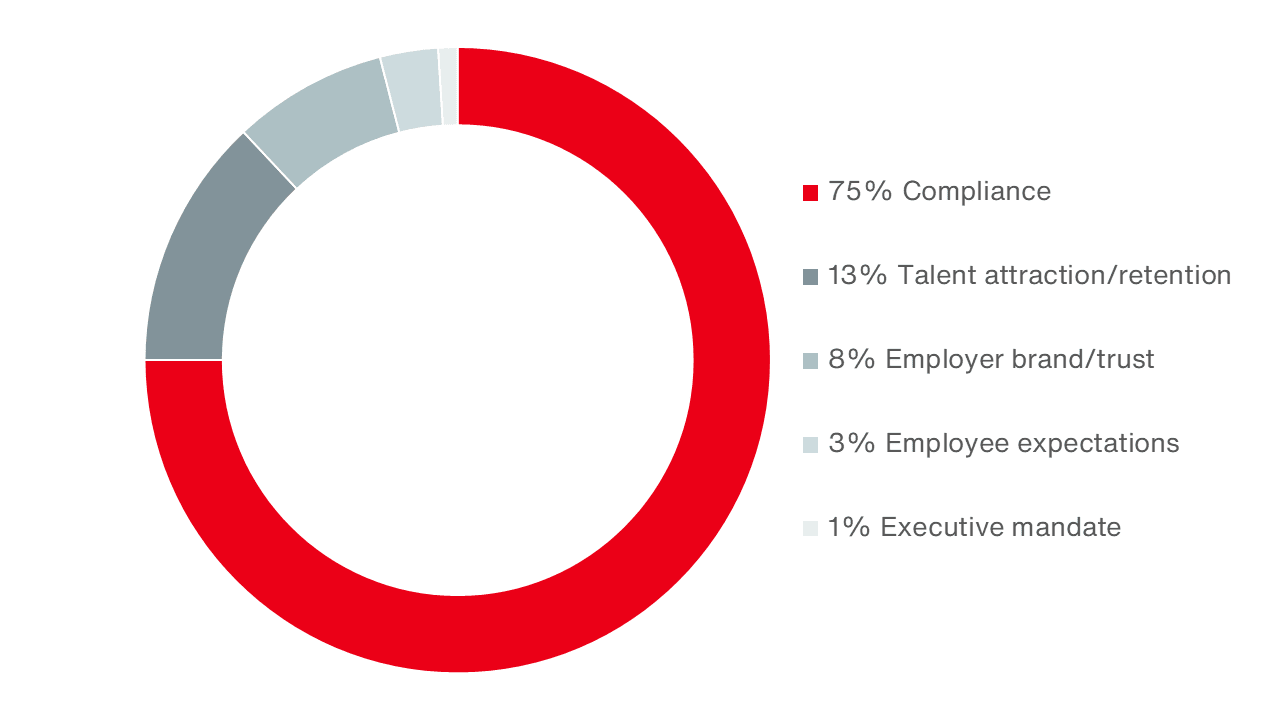
Most organizations act because they have to, but that is changing. Around three quarters of respondents to Aon’s recent pulse survey still cite regulatory or legal pressure as the primary driver. But a quarter cite strategic reasons, led by attraction and retention of talent and employer brand and trust.

Regulatory Compliance is Still the Main Driver Behind Pay Transparency

Regulatory Compliance is Still the Main Driver Behind Pay Transparency
Quote icon

It’s not just about checking the compliance box. The real difference comes when transparency is intentionally woven into your overall workforce strategy. Taking this next step can truly set you apart in the competition for talent.

Steve Guyer
Head of Rewards and Career Advisory, Talent Solutions, North America

Pay Transparency Readiness Remains Low

Many employers report progress in their pay transparency plans. More than three quarters of respondents say they have implemented one or more pay transparency measures, and more than 80% plan to do more within two years. However, implementation does not equal readiness.

Regulatory penalties are a concern for employers, but the greater risk lies in human and organizational impacts:

  • Over 80% cite manager readiness as a top concern.
  • Around two-thirds are concerned about employee dissatisfaction.
  • Fewer worry about remediation costs (41%) or legal exposure (31%).

Without the right data, training and communication, transparency can erode trust rather than build it. And employers who don’t embrace transparency at all will see confidence and trust erode even quicker.

Preparing Managers for Pay Conversations

The biggest readiness gap appears to be in manager training. Managers need to explain how pay is set, why differences exist and how decisions remain fair over time. These conversations help set the tone for a culture of transparency and fairness. Fewer than half of respondents to the pulse survey say their managers are ready for these conversations.

But managers shouldn’t have to shoulder this burden by themselves. Organizations need to ensure that HR colleagues are prepared and available as a point of escalation for managers. The process by which pay conversations are handled is equally important as the content itself.

Quote icon

Manager conversations are an overlooked factor. Companies need to prepare managers with comprehensive training. The keys are consistency of message and understanding when something is a manager question and when it might require more nuance and be escalated to HR.

Anthony Poole
Partner, Talent Solutions, Europe, the Middle East and Africa

Manager training can take many forms, be it passive methods like FAQs or learning modules, or active methods like workshops. Content, systems and process are all important and the best prepared organizations are already starting.

Different Regions, Different Levels of Readiness

Pay transparency has gone global, but readiness has not. The biggest perceived risk for multinationals isn’t regulation itself; it’s uneven manager confidence across regions.

  • North American organizations report higher manager readiness, according to Aon data. This is largely due to earlier adoption and experience with pay transparency-related pressures. However, many employers only focus on publishing salary ranges and basic role information.
  • UK and EMEA are under intense timing pressure, especially EU countries due to the directive, though final implementation timing is unclear. Many organizations understand the requirements but still have yet to build manager capability and job architecture consistency for effective execution. Only 8% of EMEA-based organizations and 2% of UK-based organizations say managers are highly prepared for pay transparency conversations. Survey respondents in this region cited legal exposure and the quality of data as additional top risks.
  • Asia Pacific and Latin America have the lowest manager readiness of all regions. Many employers are in early stages of development and implementation, often without consistent data or governance.

Understanding these regional differences is essential for global consistency and local credibility.

84%

of organizations identify managers being ready to explain pay as their top transparency risk.

Source: Aon 2026 Global Pay Transparency Pulse Survey

5 Actions HR Leaders Should Consider

  1. Bring together fragmented data. Inconsistent job and pay data remain a major barrier. Forty-two percent of employers say data quality is their primary challenge. Clean, standardized data, like the Radford McLagan Compensation Database, creates the foundation for credible transparency.
  2. Build pay infrastructure that’s adaptable for the future. Transparency works best when equity and consistency are built into job architecture, pay structures and career pathways. This supports sustainable decisions, not one-time fixes.
  3. Invest in manager capability. Managers need training, tools and support to explain pay decisions with confidence and empathy. Strong preparation reduces risk and protects workforce trust.
  4. Plan clear, honest communication. Total rewards information will become more visible over time. Clear communication from top leaders who explain what is changing, why and what comes next helps strengthen employee engagement and foster a culture of fairness and trust.
  5. Don’t make the perfect the enemy of the good. After ensuring you're in compliance, having a plan that is based on solid, defensible data is more important than having one that is 100% complete.

Building Pay Transparency Capabilities

Pay transparency will remain complex. Organizations that invest early in data, infrastructure, communications, education and leadership capability can turn transparency into strategic advantage. Aon helps employers keep up with evolving regulations and develop total reward strategies that support fairness, confidence and better workforce decisions.

Aon’s Thought Leaders

Steve Guyer
Head of Rewards and Career Advisory, Talent Solutions, North America

Anthony Poole
Partner, Talent Solutions, Europe, the Middle East and Africa

General Disclaimer

This document is not intended to address any specific situation or to provide legal, regulatory, financial, or other advice. While care has been taken in the production of this document, Aon does not warrant, represent or guarantee the accuracy, adequacy, completeness or fitness for any purpose of the document or any part of it and can accept no liability for any loss incurred in any way by any person who may rely on it. Any recipient shall be responsible for the use to which it puts this document. This document has been compiled using information available to us up to its date of publication and is subject to any qualifications made in the document.

Terms of Use

The contents herein may not be reproduced, reused, reprinted or redistributed without the expressed written consent of Aon, unless otherwise authorized by Aon. To use information contained herein, please write to our team.

More Like This

View All
Subscribe CTA Banner